In this blogpost we consider effective investment strategies for climate adaption considering the case study of earthquakes across Japan. We investigate the historic lessons learned based on investments done in the past to prevent and mitigate future losses.
Combating future climate change induced natural disasters require effective investment strategies, thus this post takes Japan as a case study for evaluating strategies employed.
- Natural disasters in general
- Occurences and magnitude of Japanese earthquakes
- Mean annual fiscal loss – Costs of earthquakes
- Effective climate adaption strategies
- Concluding remarks
- References
Natural disasters in general
Natural disasters are notoriously hard to predict. In fact earthquakes are unpredictable in nature meaning that the economic and social losses are usually substantial. Furthermore earthquakes are the driving mechanism for a second even deadlier disaster: Tsunamis.
Related read: Tsunamis. The what, when and where.
This dufecta of events demands an extensive effective climate adaptation strategy in order to mitigate future economic and social losses.
Occurrences and magnitude of Japanese earthquakes
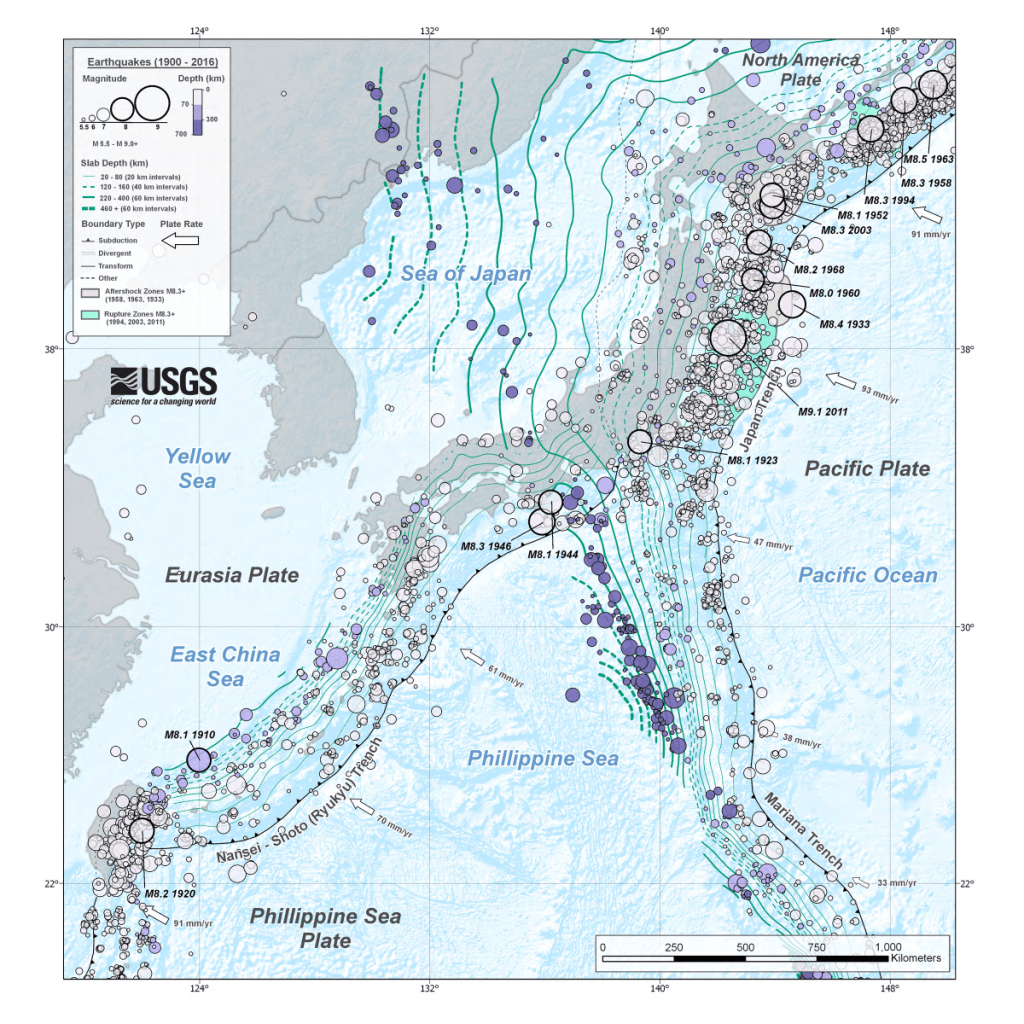
With this introduction, lets examine the history of earthquakes in Japan. The magnitude of each earthquake and the geographical location of the epicenter is displayed in Figure 1. Figure 1 contains the most severe magnitude 5.5+ earthquake occurrences from 1900 until 2016.
The earthquakes marked on Figure 1, all have a magnitude of 5.5+ on the Richter scale. How does the richter scale measure an Earthquake? The principle behind the Richter scale is outlined in Figure 2. The Richter scale is logarithmic. Small increases in richter magnitude therefore corresponds to significantly more energetic earthquakes.

Earthquakes near and around Japan are frequent due to plate tectonics and subduction zones.
Related read: Earthquakes – Top ten misconceptions, Tsunamis – top 10 misconceptions
Mean annual fiscal loss – Costs of earthquakes
Aspects of natural disasters which are important to recognize are the need for effective investment strategies for climate adaptation. Moreover, the internationally recognized IPCC report concludes the need for further action to combat impending changes in future weather systems. In summary they conclude that climate extreme phenomena are increasing in strength, ref: https://www.ipcc.ch/report/ar6/wg2/.
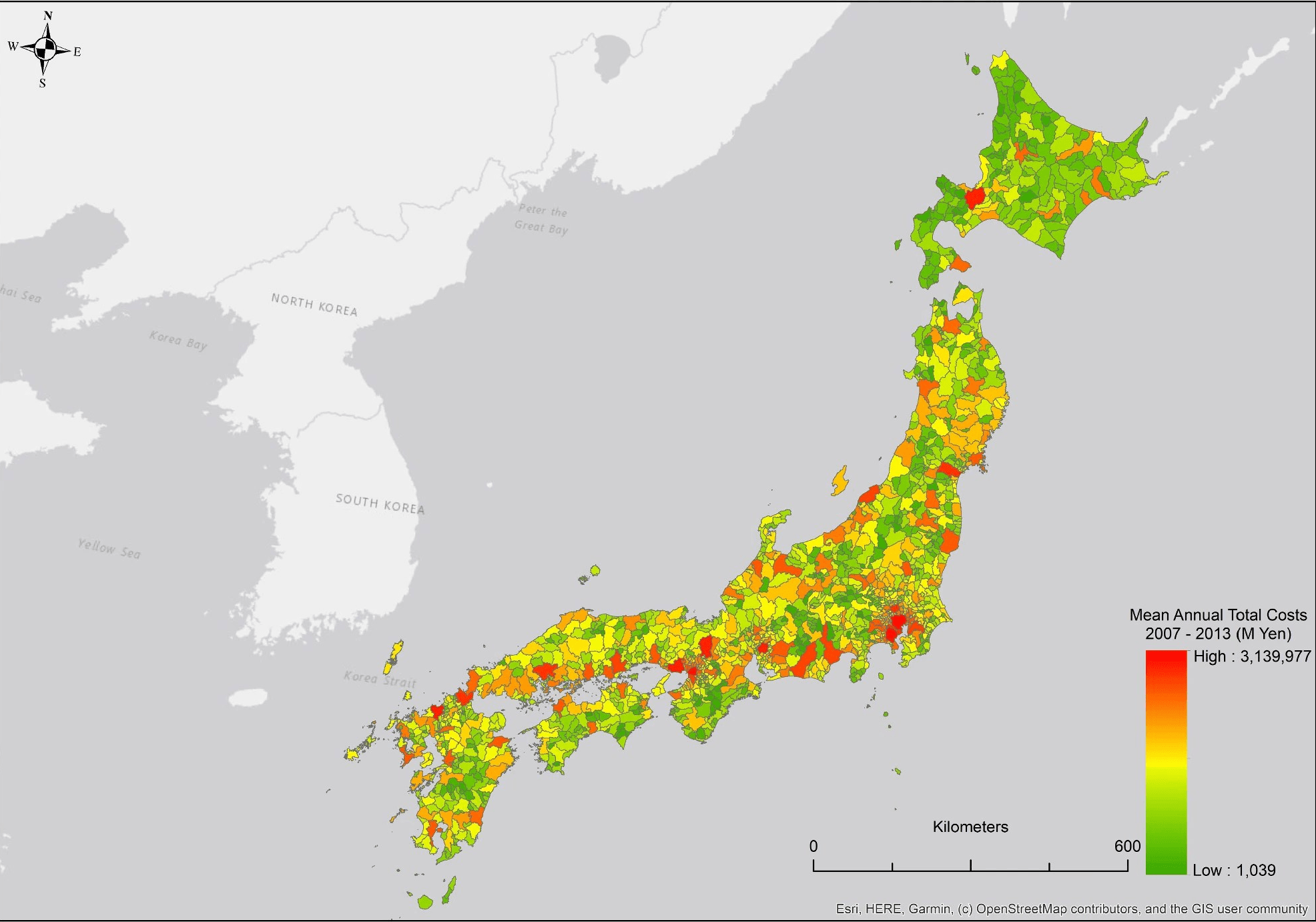
The total economic loss following natural disasters range depend on the geographical extent of the catastrophe. In Japan, researches have investigated and modelled the fiscal costs associated with earthquakes for the period 2007-2013, their results are shown in Figure 3. The mean annual total associated costs are then mapped out on a heatmap. Affected regions with largest loss are shown with red coloring.
From Figure 3, it can be seen that the mean annualized fiscal loss are largest near the coasts and smallest towards the center of the island. This can be associated with the possible effect that tsunamis have on the following destruction of the city infrastructure.
Effective climate adaption strategies
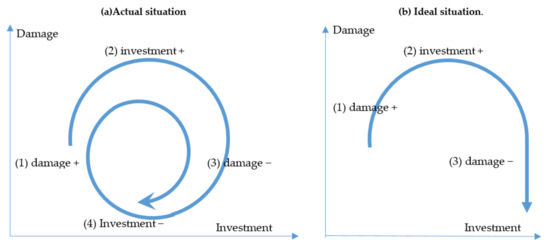
Effective climate adaptation strategies for Japan are necessary to combat changing weather extremes require investment decision. The ideal hypothesis is making an investment decision as a result of initial damage which is sufficient to combat future damage.
In actuality however, researchers from the university of Japan, came to the conclusion that each of the historic catastrophes have lead to increased spending until external triggers arise such as recessions, wars and tightening national financing.
The researchers investigated their hypothesis by looking back the past ~130 years. During this timeperiod Japan has experienced famine, flooding, wars, political unrest and recession. They found that the investment strategy was spiraling downward following each new catastrophe, as is illustrated in Figure 5. In Figure 5, the abscissa show damage while the ordinate show budgeting used for climate adaptation.
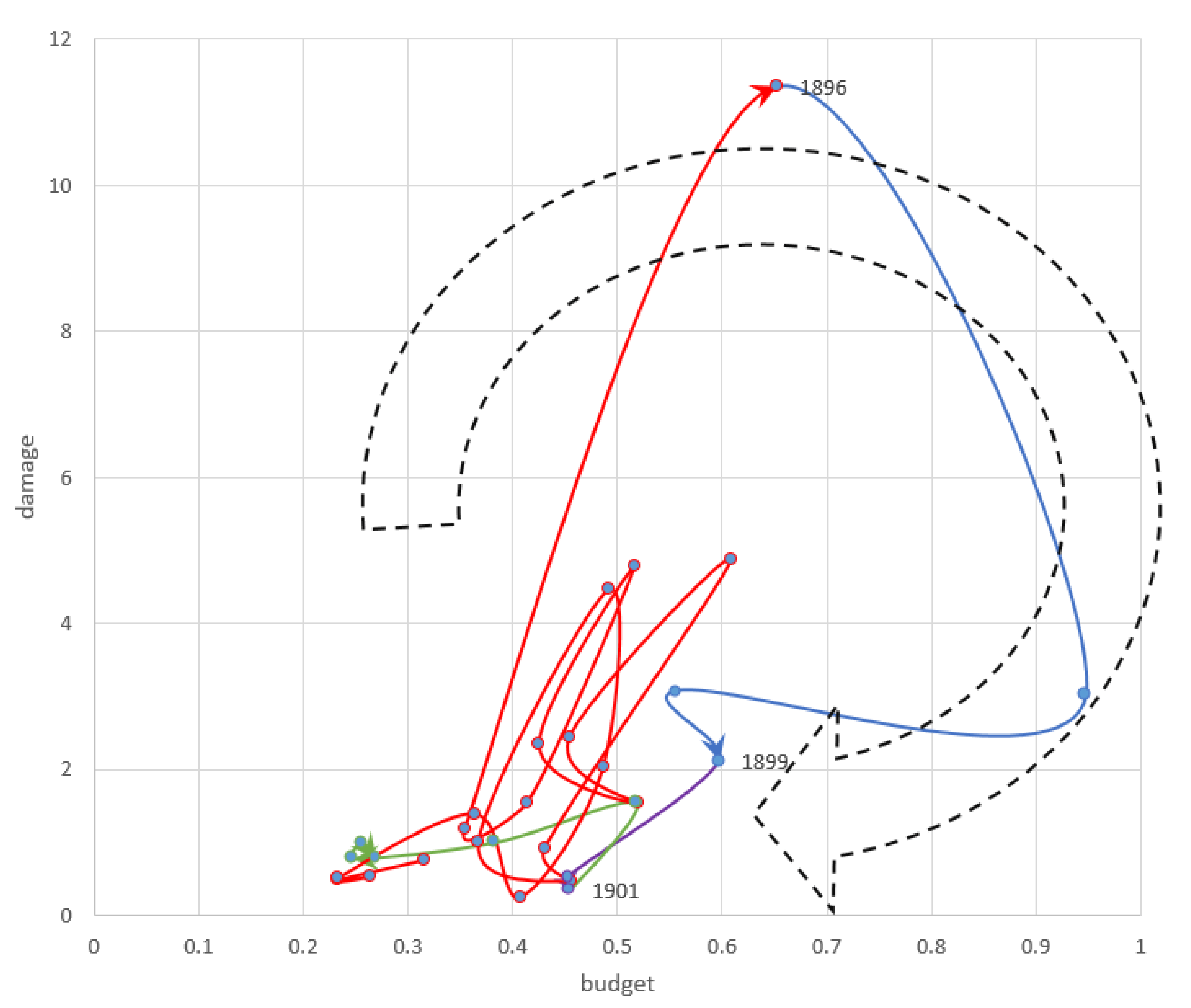
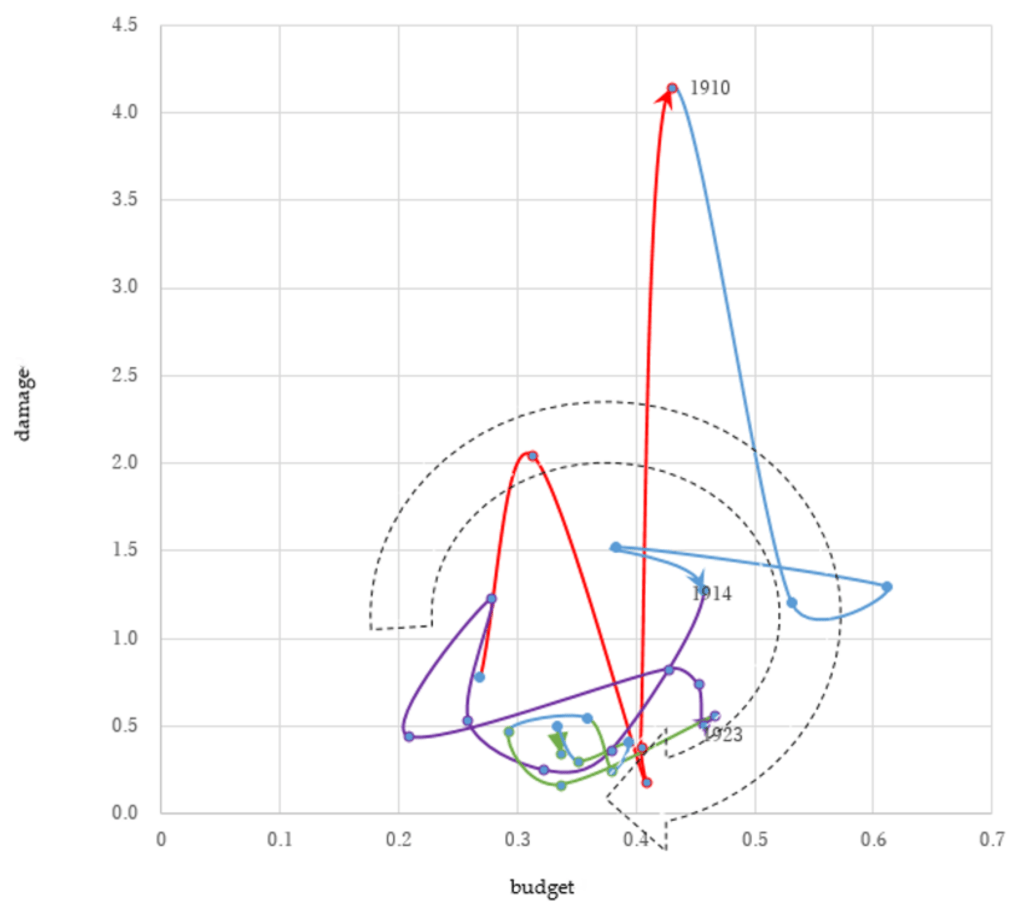
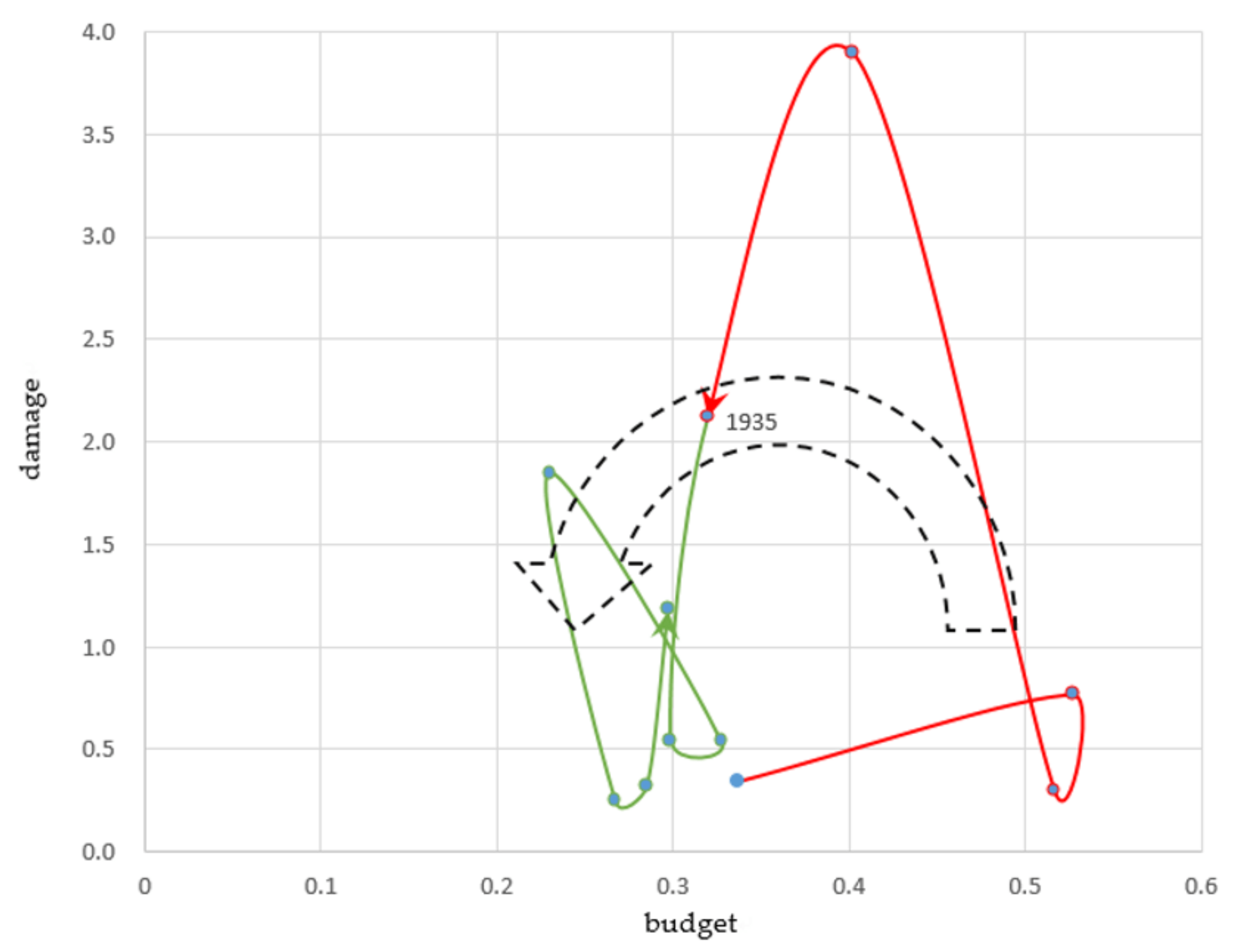
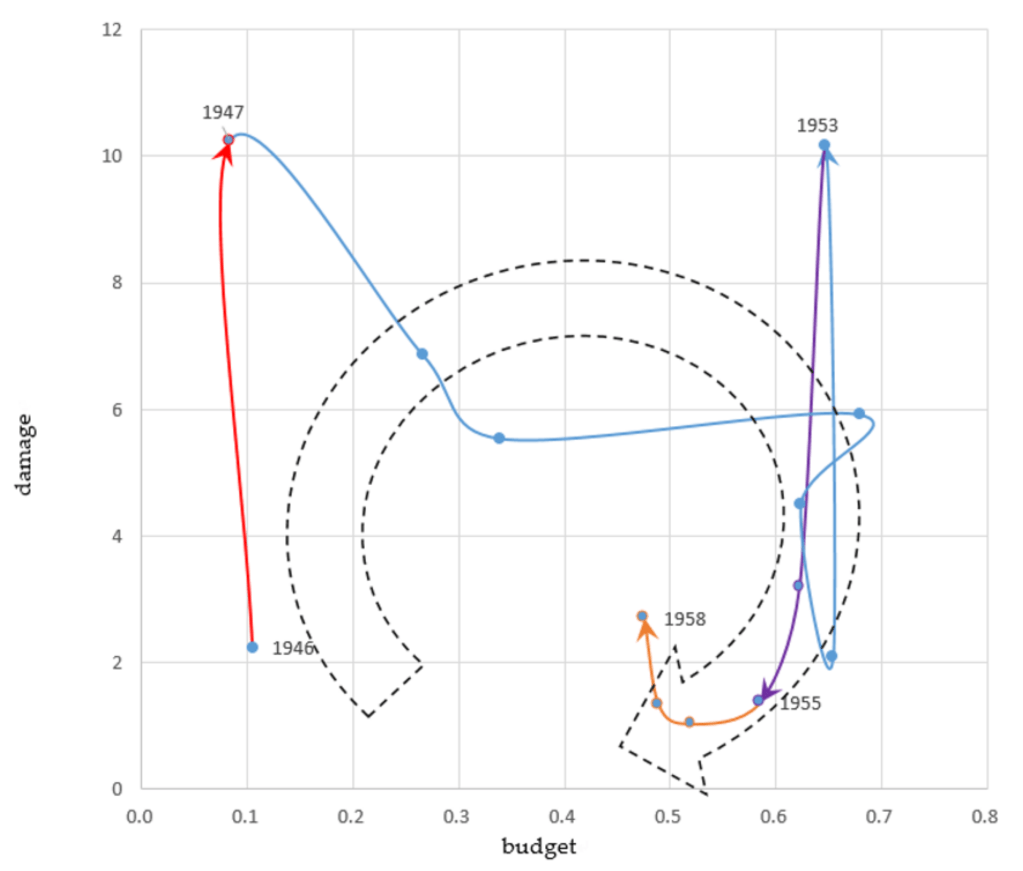
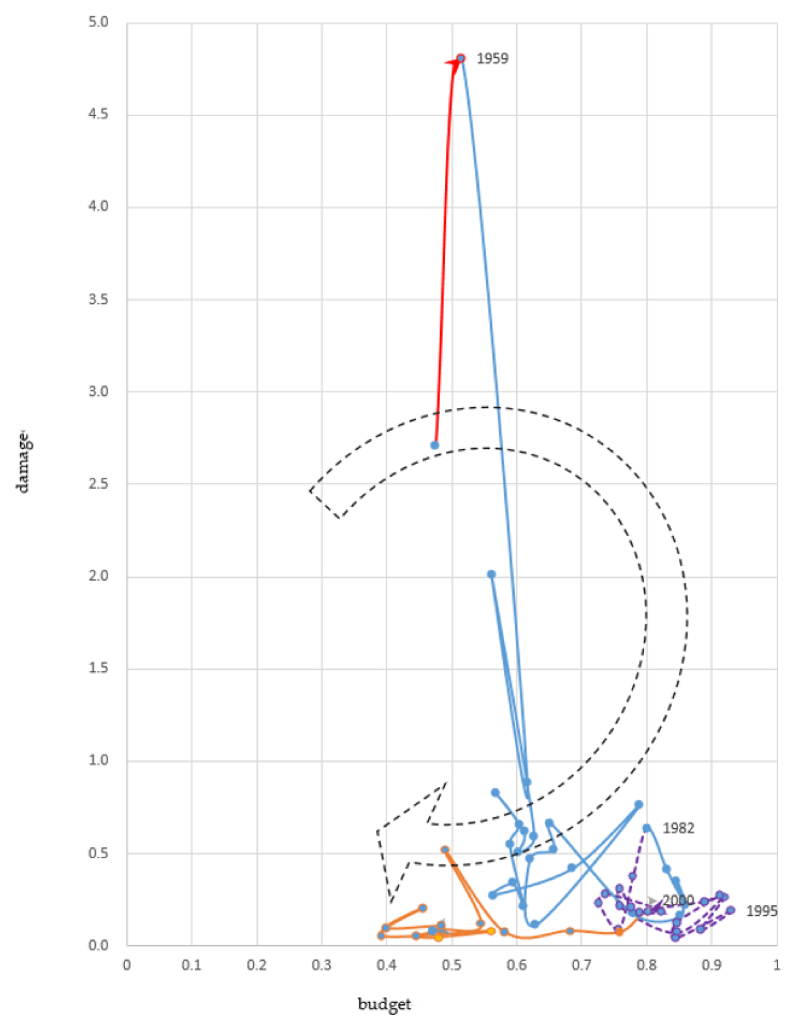
This tendency of damage followed by increasing budgeting is a continuous process where decisions saving future lives must be timed correctly when external stressing factors are sufficiently low.
Concluding remarks
Effective climate adaptation strategies for Japan are necessary to combat future climate change.
The mean annual fiscal loss following earthquakes varies geographically throughout the country and is worst in cities near the coasts.
In theory the investments in climate adaptation methods made will mitigate future natural disasters.
In practice the investments made are spiraling downward following disasters with increased spending on climate adaptation.
External triggers such as wars, political unrest and recessions have historically affected the budgeting for climate adaptation and so, the window for effective action is small.
References
“The fiscal costs of earthquakes in Japan.” Int Tax Public Finance 2022. By Ilan Noy,Toshihiro Okubo, Eric Strobl, and Thomas Tveit. https://doi.org/10.1007/s10797-022-09747-9
“Disaster risk reduction funding: Investment Cycle for flood protection in Japan”Int. J. Environ. Res. Public Health 2022. By Mikio Ishiwatari and Daisuke Sasaki. https://doi.org/10.3390/ijerph19063346

 The Skjærup blueprint
Leave a comment