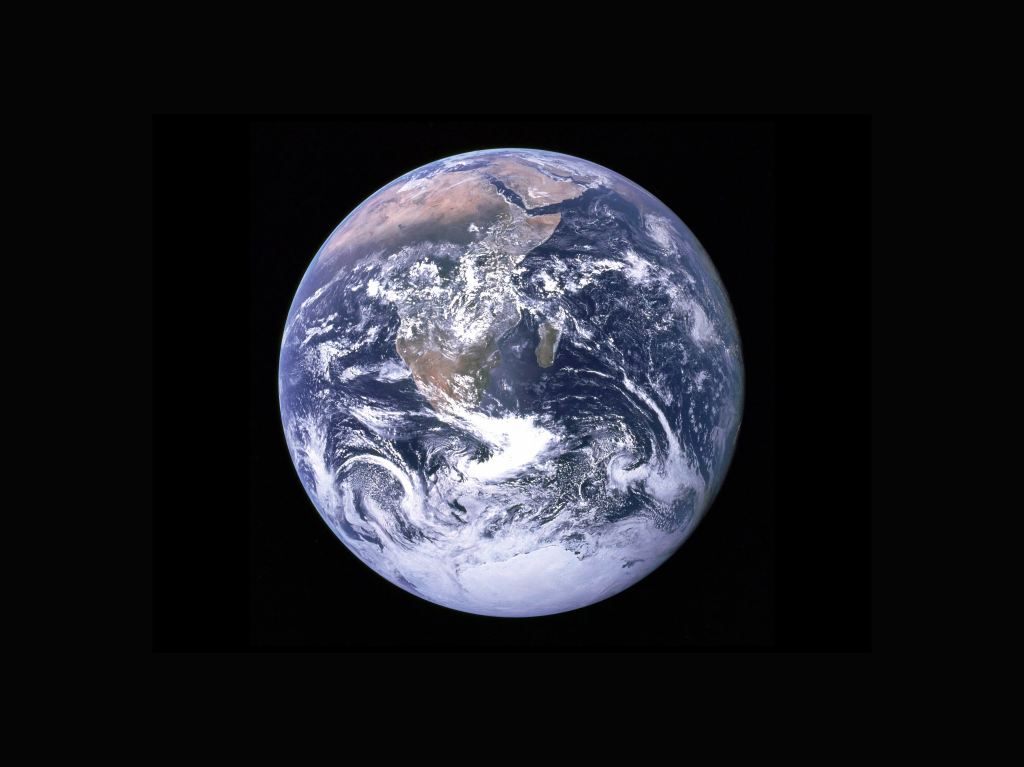
In this blog post we will talk about the ‘spherical’ earth that we are all living in. Some people have a common misconception that the earth is flat, and for millennia this has been a carefully discussed topic especially in the middle ages where religious beliefs ruled the entire society.
We will try and debunk utilizing state-of-the-art photos, mathematics for describing our ’round’ earth and finally come with some facts about the earth and common misconceptions which people should be careful not to fall against.
- Is the earth flat?
- Photographic evidence of ‘Globe’ earth
- The Spherical earth
- The non-spherical earth
- Conclusion
- References
Is the earth flat?
Before starting off on our talk about our beloved earth lets try and answer one of the simplest questions most people have asked themselves: Is the earth flat? To start off with, it certainly seems flat to the naked eye, as the horizon on which you can steer out into creates a seemingly straight line as expected with a flat earth.
For centuries, humanity has pondered the fact that they believed themselves to be the center of the universe, imagining the Earth as a flat plate floating on the back of a turtle or a flat disc holding the sun in a curved space around a stationary Earth.
Fighting the ‘Globe’ Theory
One of the latest and most famous examples of such a phenomenon is the 1893 drawing by Richard Ferguson, a firm believer in the flat earth theory, who constructed a ‘plausible’ illustration of how the earth could be a curved square space with a stationary, centered earth around which the entire solar system revolves. He created this drawing to ‘combat’ the dominant ‘Globe’ theory.
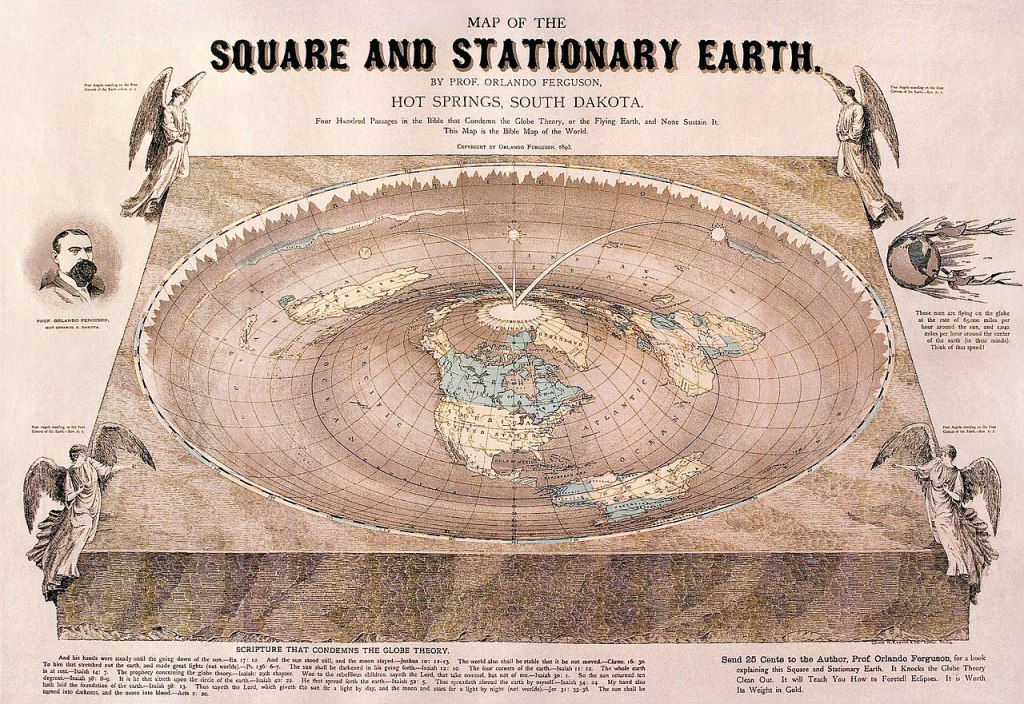
Even to this day with our photographic evidence from satellites and space missions, there exists people who remain members of the so-called flat-earth society, a society of firm believers in the flat earth theories that exist.
Photographic evidence of ‘Globe’ earth
After the invention of satellites in the 20th century, photographers captured images of the so-called ’round’ earth, as seen in Gallery 1. This collection of pictures clearly showcases our blue ’round’ earth, proving that it is indeed round.
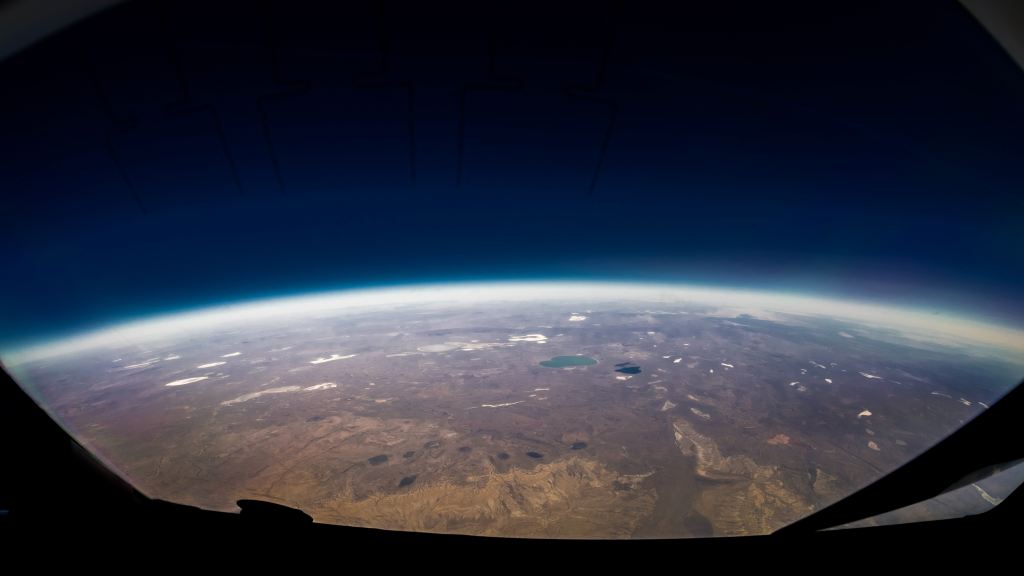
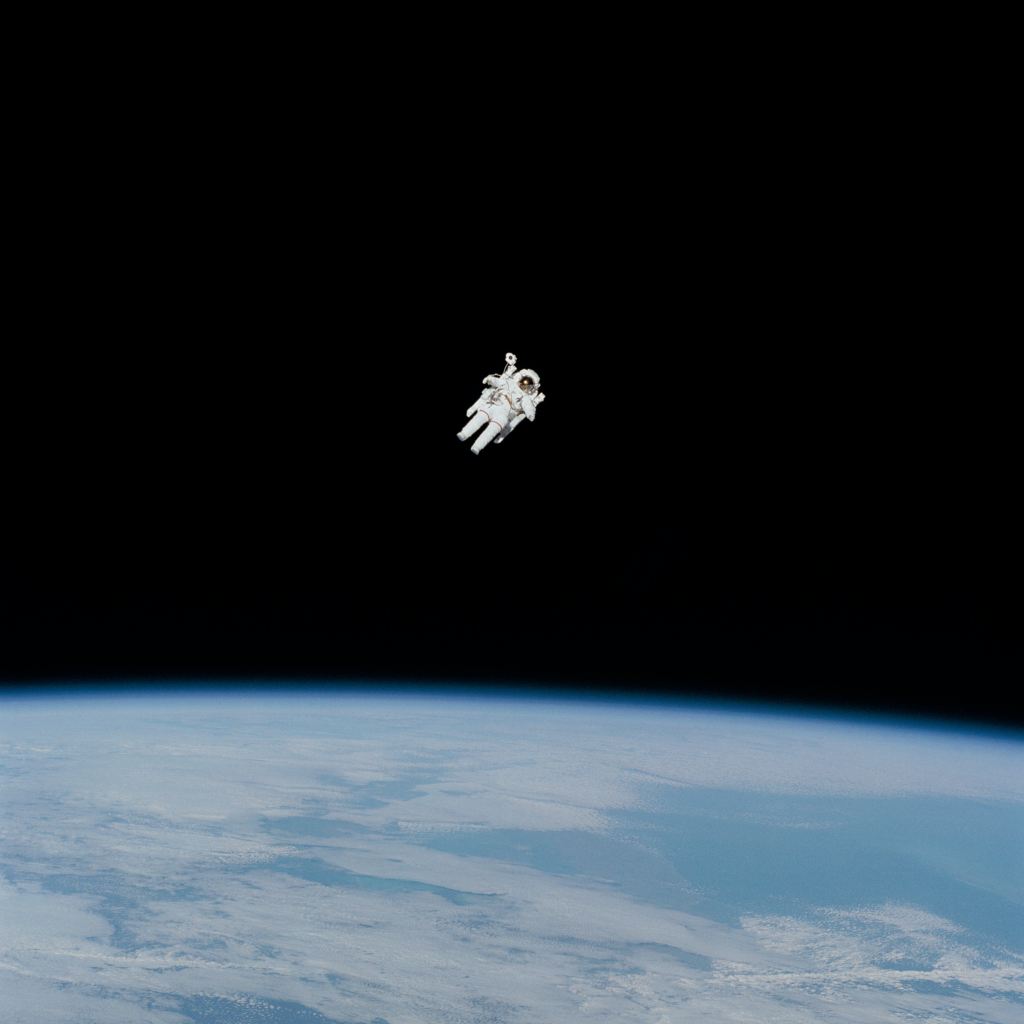
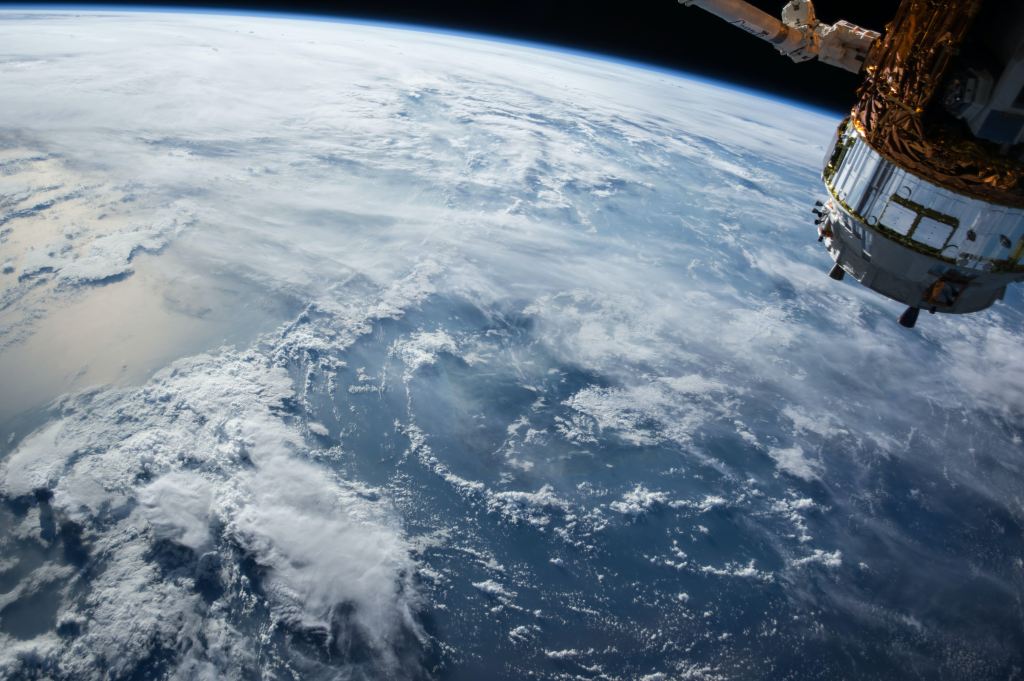
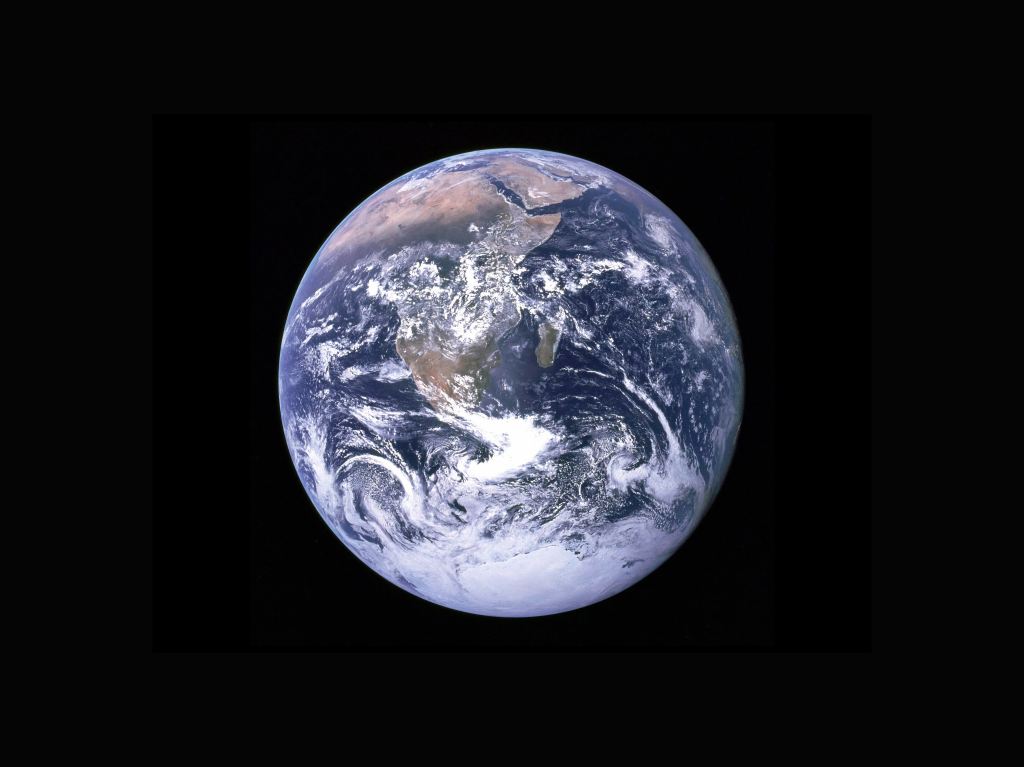
This earth looks a lot like a sphere and surely this is a way better approximation of the shape of the earth rather than the flat earth society experienced. The following shows how to calculate the spherical earths volume, circumference and surface area based on a supplied radius of the earth.
Related read: Earthquakes – Top ten misconceptions, Tsunamis – top 10 misconceptions
The Spherical earth
Now let’s dive into the mathematical description of our spherical Earth. We can most easily describe a sphere by its radius, r, from which we can calculate the volume, V, surface area, A, and the two-dimensional circumference, S.
To determine the radius of the Earth, researchers use multiple methods, and a great overview of these different techniques is available in a Wikipedia article: https://en.wikipedia.org/wiki/Earth_radius.
The most common values for Earth’s radius range from 6,384 km to 6,528 km. This variation highlights the differences in Earth’s roundness, as mountains and sea-floor valleys don’t align perfectly with a perfectly spherical model.
The non-spherical earth
The spherical earth which we live on is therefore not exactly round as first expected as the mountains valleys and later realized poles of the earth aren’t accurately mapped in a spherical system.
In fact when mathematicians worked on theories of spherical earths and tidal forces, wind speed generations, Coriolis forces to mention a few. These are facts about the earth which a full perfect sphere cannot perfectly answer.
The slight variations in shape and size of the earth have significant impacts on the way our planet behaves. For example, the mountains and valleys affect wind patterns and ocean currents, and the non-uniform distribution of mass leads to variations in gravity, causing fluctuations in the Earth’s rotation.
Despite these complexities, the spherical model of the earth has proven to be incredibly useful for navigation, satellite communication, and understanding the world around us. But it’s important to recognize that the earth is not a perfect sphere and that its imperfections have real-world effects.
Mathematical description of imperfections
To mathematically describe the deviations from the spherical shape, we use the equations of a flattened ellipsoid. We can represent an ellipsoidal disc through two different equations that focus on its radii, as outlined in the equations of state.
These equations describe both the surface area and volume similarly to that of a spheroid, replacing the radius ( r ) with the parameters ( a ), ( b ), and ( c ).
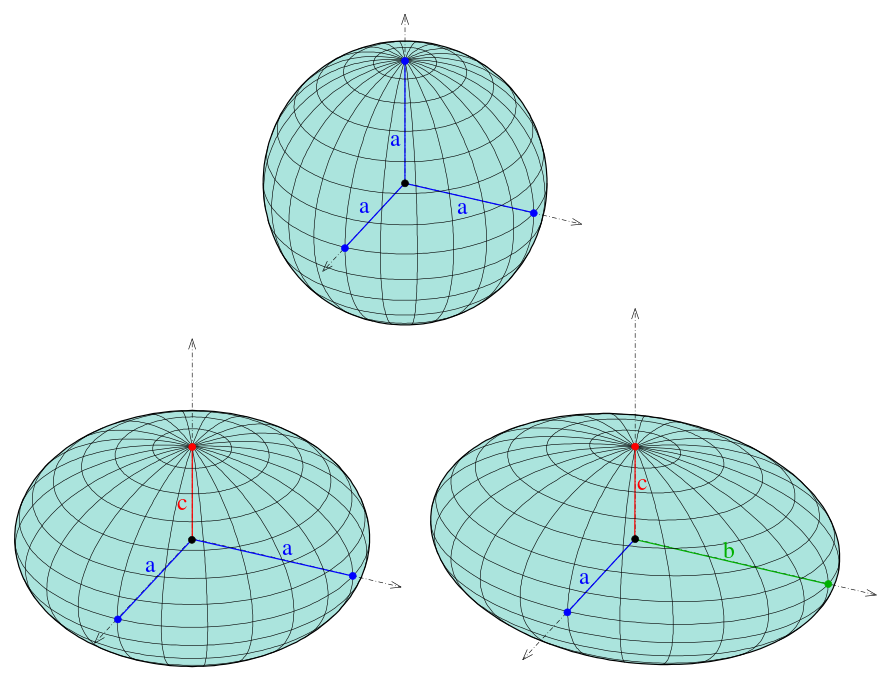
To calculate the surface areas of ellipsoids, we face more complex expressions because the surface integrals depend on how we parameterize the different values of a, b, and c, among others.
Typically, we use parameterization in spherical projections that correspond to spherical coordinate systems, which play a vital role in many aspects of life and engineering.
Various applications, from satellite tracking systems to navigation systems for vessels and ships, utilize these equations. They also aid in map creation and transformations used for developing specific map types.
Conclusion
In summary, the notion of a spherical Earth is supported by both mathematical principles and extensive photographic evidence from space. Despite the persistent beliefs in a flat Earth, facts and scientific research overwhelmingly demonstrate that our planet is best approximated as a sphere, albeit an imperfect one due to its varied topography and gravitational differences.
Understanding the complexities of the Earth’s shape contributes significantly to fields such as navigation, engineering, and environmental science. Recognizing that the Earth is not a perfect sphere is crucial for accurate modeling and predictions that impact various aspects of our lives.
As we continue to explore and learn more about our planet, it is essential to appreciate the intricate realities of our spherical Earth while remaining vigilant against misconceptions that can cloud our understanding. Through education and curiosity, we can better comprehend the unique dynamics of this remarkable planet we call home.
References
Wikipedia
 The Skjærup blueprint
Leave a comment