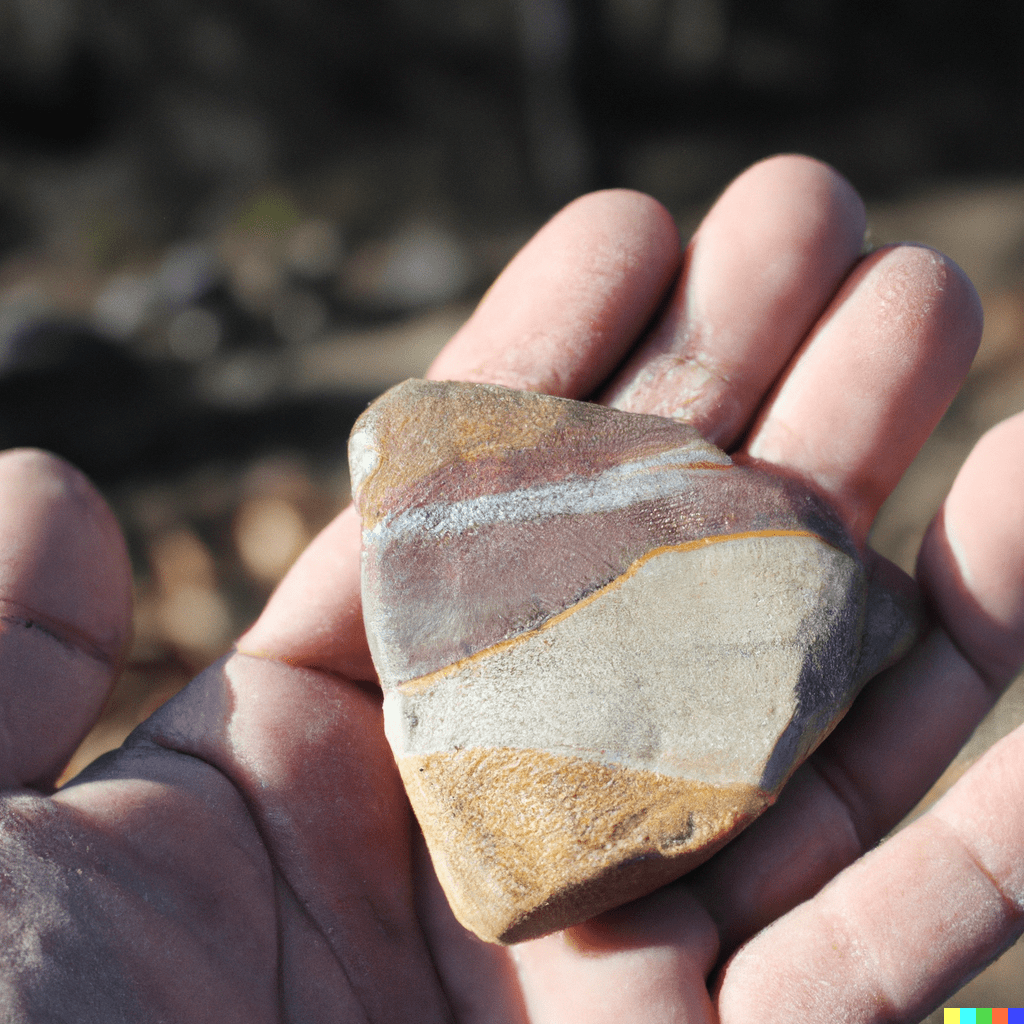
In this blog post we will try and answer a common question: How does clay formation affect rock? The formations of clay and rock deposits are varying and influencing important ways that water and nutrients flow through.
Clay formations
Clay soils form in specific areas around the globe. They consist of very fine-grained substances that are smaller than the limit at which humans can sense individual grains.
At these small scales, we find certain characteristic chemical compounds. Some of these compounds are outlined in our earlier blog post about clays in general. Check out our related reads for more information.
Related reads: Natural materials – clay, Natural materials – silt, Soil characteristics – sand
The usages of clay ranges from pottery until the beauty industry with usages in skin care and creams. The chemical compounds have rejuvenating properties when applied to the skin and often times help repair damages from weather and sun light.
Clay forms through specific patterns, evolving from old weathered rock over centuries of weathering. This process occurs where water, air, and wind actively tear through the individual minerals of exposed rocks, which are then transported toward the sea via lakes and reservoirs.
Clay depositions
The clay formations from the weathered rock transported towards the sea are piling up in locations where the fluid velocity allows for the individual grains to settle on the ocean floor. The settlement allow for the grains to accumulate and over time will enable use cases of the differences within.
Deposition patterns
Figure 1 illustrates the typical processes that occur when clay particles sediment from river delta mouths outward toward the sea. These sedimentation processes, well understood for the settling of clay and silt particles, require calm waters for small particle diameters to easily fall out of the water column.
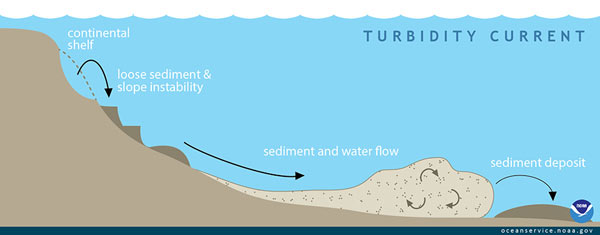
Since small turbulent fluctuations can cause resuspension of the fluvial sediments such as clay and silt, it typically requires deep waters with quite small upwards momentum and plenty of time in order to deposit onto the sea bed these fine grained substances.
Through the centuries river mouths build up layers of fine grained material which consist of weathered rock transported massive distances.
Sedimentary rock deposits
This leads us to the question: how does clay formation affect rock? Since fine-grained material can interlace and mix with much larger rock formations, such as stones and gravel, we sometimes find a diverse mixture in these sedimentary mineral deposits.
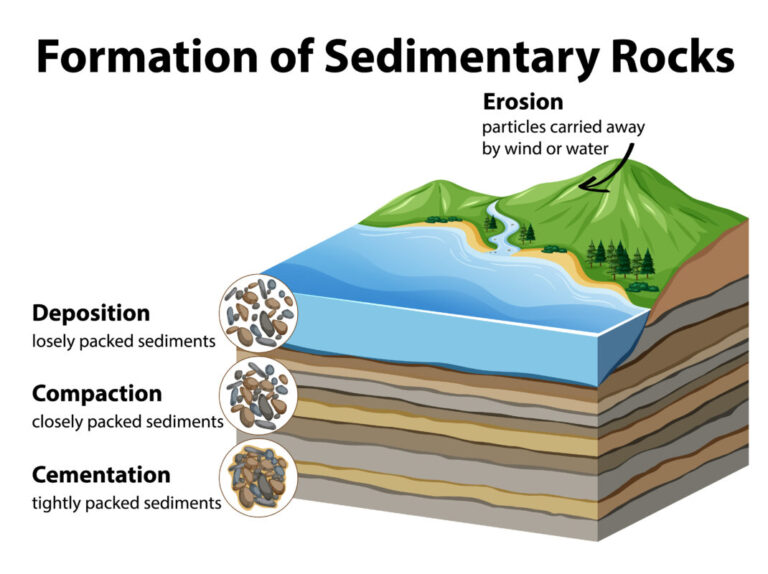
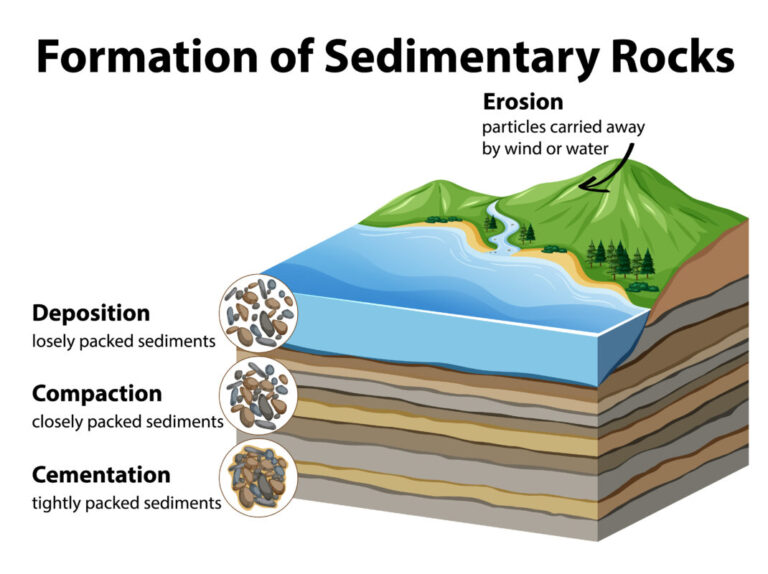
Over time, the continual sedimentation of new layers of fine-grained material creates a typical process where individual layers stack on top of each other, leading to the development of compaction layers. These compaction layers consist of fine-grained clay and silt interlaced with salty deposits from seawater.
Compaction
The following compaction of the continual development of new sedimentary layers following the process of settlement of fine grained material causes the compaction layers to gradually push out inert water from the core of the material causing each of the developed layers to sink further into the soil and compress.
Cementation
What then follows is the cementation process where each of the fine grained layers filled with organic salty deposits undergo a cementation procedure with the chemical reactions causing a binding agent of the now compacted layers.
This results in the creation of new types of rock called sedimentary rocks. The whole process of sedimentation, compaction and cementation is outlined in Figure 2.
The sedimentary rock deposits play a crucial role in different industries such as the oil and gas industry. Here sedimentary rock are often porous with organic compounds within these include shale formations where the deposits of organic compounds go through a calcification process turning from soft shell animals into hard chalk.
Oil deposits within chalk reservoirs
Chalk reservoirs significantly contribute to oil production in the Nordic countries, particularly in Denmark and Norway, where deposits of oil are found within the underground chalk formations of the North Sea. In this region, oil and gas production is vital for the uniqueness and identity of these nations.
The organic compounds develop into oil and gas through a process called diagenesis. Diagenesis is a process where high temperatures and pressures transform the properties of the organic material typically found in deep sedimentary layers.
Organic compounds undergo a transformation into hydrocarbons due to escalating pressures and temperatures beneath layers of sedimentary rock. This phenomenon facilitates the porous material, enabling the rock formations to effectively retain specific oil compounds, making them readily extractable later on.
How does rock deposits affect clay formation
For Clay to form properly, weathering processes act on rock deposits due to climatic effects, which creates variations in clay formation and allows the mineral composition to change based on element exposure.
The process of forming clay from rock is a long term effect where the rock undergoes the transformation through weather effects such as freeze-thaw cycles enabling crack initiation in the individual rocks leading to an increasing amount of water entrainment which again freezes, expands and lead to the development of cracks.
Another example of weathering effects come from chemical reaction with the air and water surrounding the rock minerals. These allow for the differences within the clay composition to easily become apparent enabling formation of small particle sizes clustering together forming the familiar clay size material.
Conclusion
In this blog post we have considered how clay formations affect the development of rocks. We have uncovered the main processes behind sedimentary rocks with the development of sedimentary layers following compaction and finally cementation.
We have seen that high pressures arising from deep layers which grow in size continually following the sedimentation process enables the chemical reactions necessary for the development of cohesive rocks.
References
Wikipedia
Stokes law illustration: https://www.silt-barriers.com/Stokes-law-and-turbidity-current.html
Deposition pattern illustration: https://longacresranch.org/wp-content/uploads/2021/12/blueringmedia-768×574.jpeg


 The Skjærup blueprint
Leave a comment