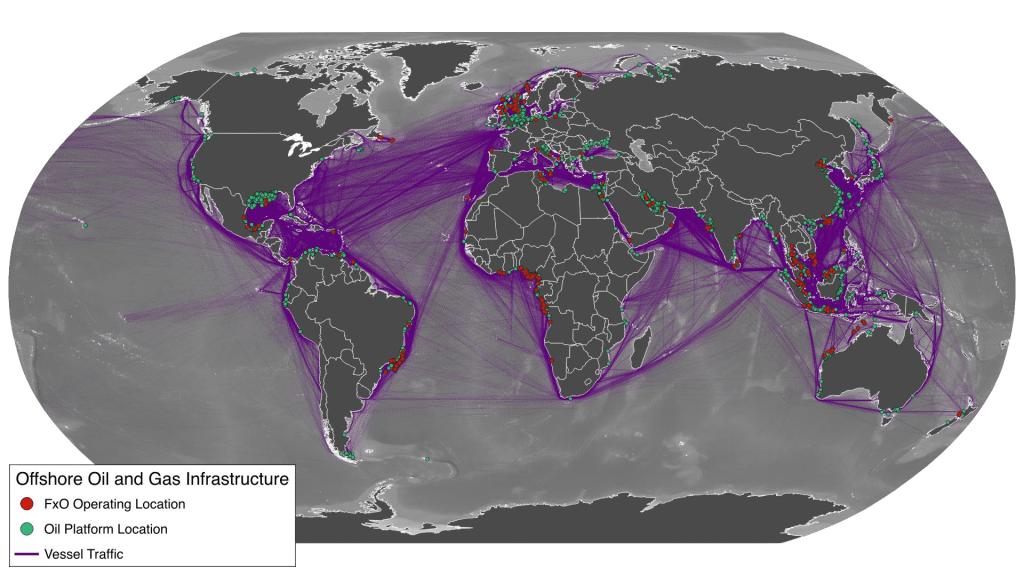
The environmental impact of offshore assets is becoming ever more important as public and governmental agencies strive to look into a more holistic view towards expansions offshore, whether that be energy islands, windfarms or oil and gas infrastructure.
This blog post tries and uncover some crucial aspects including marine mammals, biodiversity, sound pollution, trawling and nature conservation policies. These are just some of the multi faceted problems faced when trying to construct something offshore.
- Offshore infrastructure in the North sea
- The influence of noise on large mammals
- Past, present and future offshore infrastructure in the North Sea.
- Chalk underground in the North sea
- Oil and gas platforms impact on ecosystems
- Shipping industry’s contribution toward ecosystem disturbance
- Development of Natura 2000 policy
- Conclusions
- References
Offshore infrastructure in the North sea
The offshore industry began developing in the USA over the past century and expanded to many parts of the world, including Norway, Denmark, and the Middle East. This growth aligned with the rapid global industrialization of the past century, raising living standards for populations worldwide.
Related reads: Offshore engineering and future energy production solutions, Understanding clay characteristics across Denmark
The primary reason for this growth was the continuing industrialization happening across all aspects of society. This lead to the construction of offshore assets designed with the purpose of producing an increasing amount of oil and gas. These resources where then used to ensure a constant flow of electricity, heat and water for our cities and transforming agriculture from something everyone had to do, to something only a handful of people needed to do.
As an example of the expansion and rapid development offshore, lets look into the offshore developments within the Baltic and North sea. This is an area of high interest in the sense that continual development is ongoing considering both offshore windfarms and industrial oil and gas infrastructure.
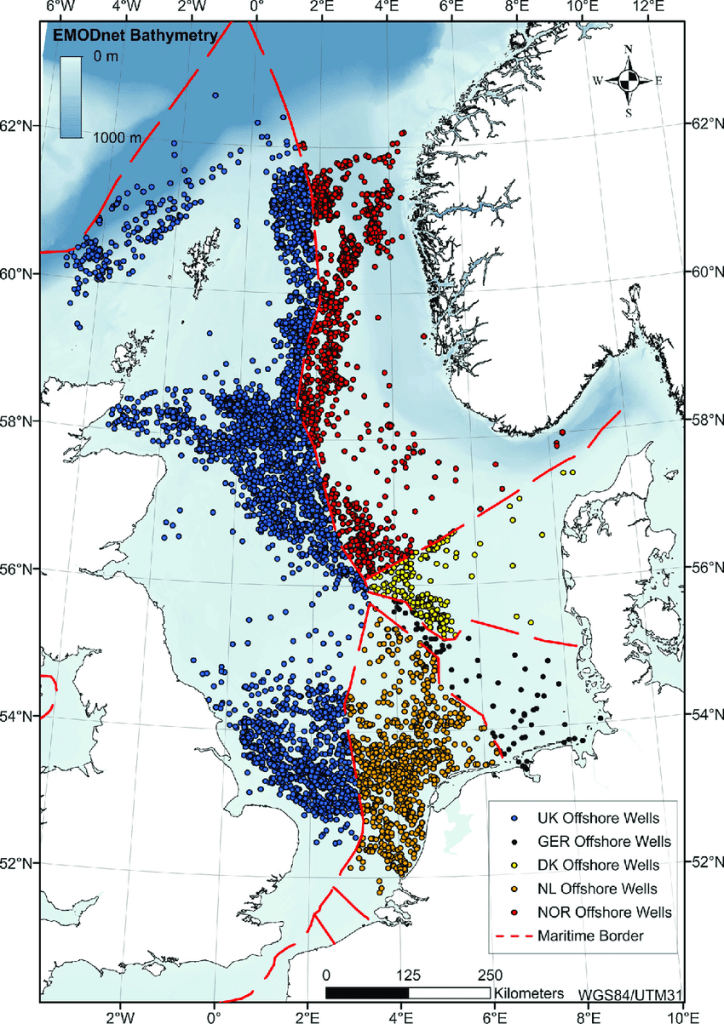
The number of wells producing oil and gas have been increasing over the years as is visible from the figure and a direct result of the increased need for extraction of oil and gas. The infrastructure produced has a profound impact on wildlife by creating hard structures in areas far offshore, providing possible habitats for marine fauna and migrating birds, while simultaneously disrupting the migrations of large marine mammals and in-situ fauna.
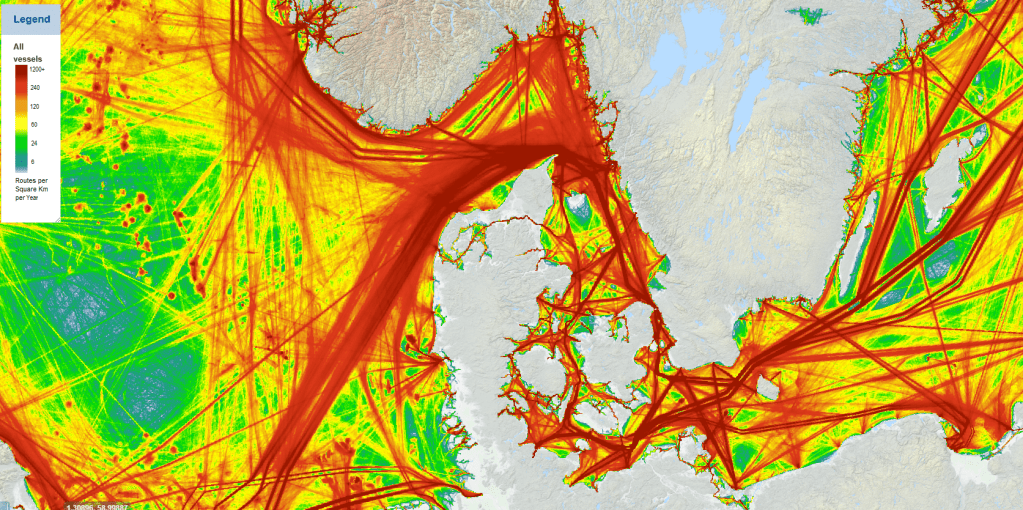
The installation procedure is particularly critical for large marine mammals, such as whales, as they are affected by the noise patterns traveling hundreds of miles underwater. Not to mention the change in vessel traffic.
The influence of noise on large mammals
The installation processes, particularly the hammering of jack-up rigs into the seafloor, generate noise levels that exceed what marine mammals can tolerate, severely impacting animals, including large mammals like whales.
The noise levels from jack-up installations can reach hundreds of kilometers away destroying eardrums of marine mammals and causing migration route disturbances.
Scientific communities debate the exact impact, but they agree that noise level disturbances affect the optimal migration routes of mammals. As the whales is high in the food chain and feasting on krill and other smaller animals, the impact from increased noise levels trickles downwards as predatorial pressures adapt to the surrounding sound levels.
The WWF organization has compiled a set of maps consisting of measurement series and sightings of whales across the oceans on earth leading to the creation of migratory routes of a variety of species across the world.
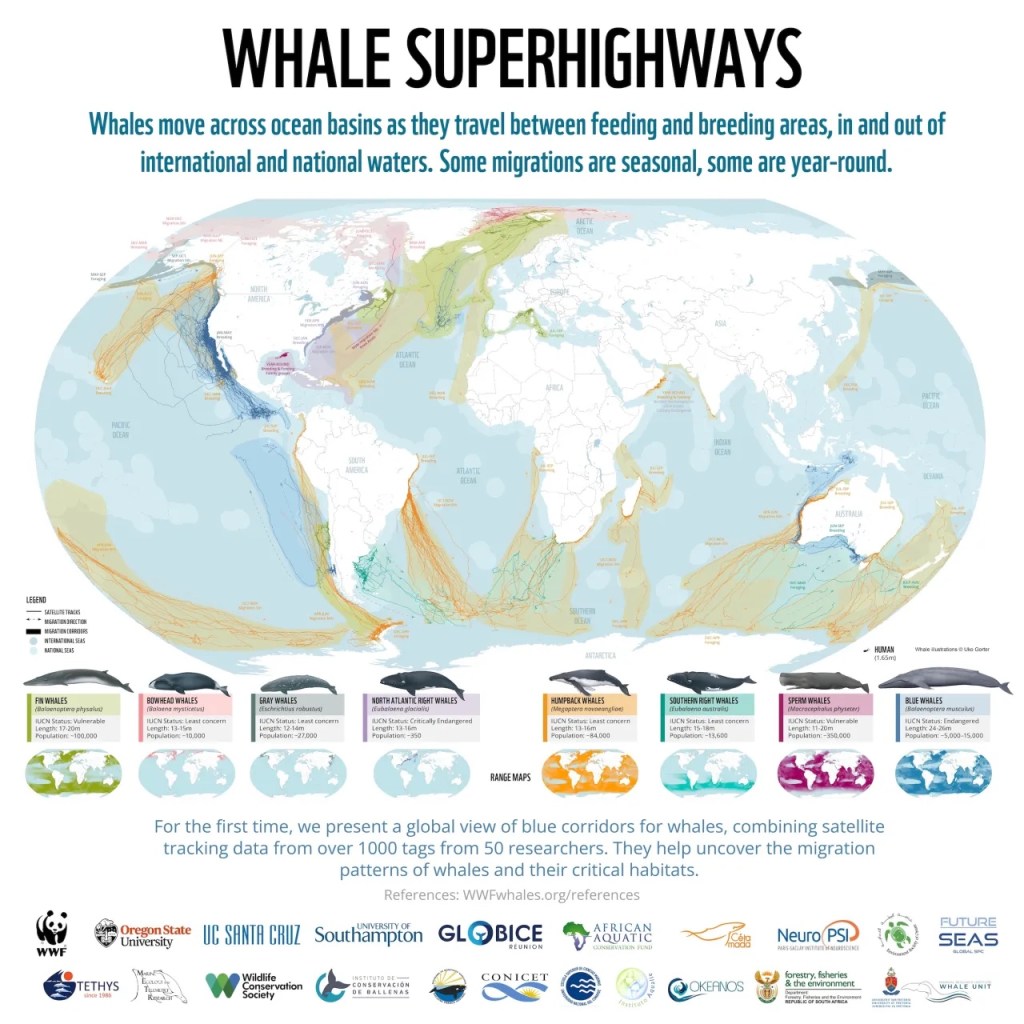
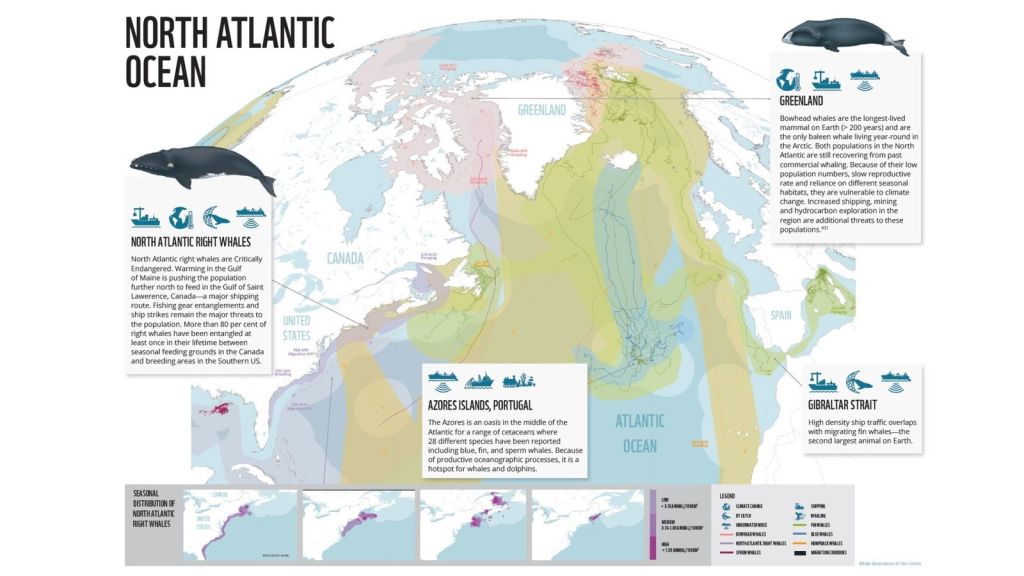
The migration routes are impacted by increased noise pollution levels, to a degree that is difficult to quantify but undeniably exists.
Engineering methods for reducing underwater noise pollution
This issue have created the need for ingenuity towards methods for mitigating offshore underwater noise. A plethora of solutions have been invented to solve the issue, such as bubble curtains, vibration piling, damped vibrations, and suction buckets.
The methodologies are widely used in the offshore industry, including monopiles, oil and gas infrastructure, and energy islands, to name a few key areas.
Building on these efforts, engineers can specifically design the installation process to uniquely install individual monopiles in a safe and sound manner disturbing the underwater noise landscape as little as possible.
The issues with noise doesn’t stop from the installation process as the oil and gas infrastructure consists of large drills, turbines and moving equipment generating a large amount of noise throughout the area and in particular propagated underwater.
Hypothetical noise issues for offshore wind monopiles
After installation, the rotating wings on the windmill produces a low frequent constant noise propagating through the water column, this might affect the animals immediately surrounding the monopiles.
Researchers and scientists may investigate this possible issue in the future, as it is not fully understood yet. They could also compare and relate this issue to noise from large vessel propellers, which disrupt the mating calls of whales and other large mammals, like dolphins, affecting underwater creatures.
Past, present and future offshore infrastructure in the North Sea.
Studies conducted by researchers have looked into the past present and future plans for energy infrastructures across the North Sea. They looked into distribution and type of installment varying from Jack up’s till monopiles of offshore wind turbines.
Another key feature is the distribution of floating platforms around the North Sea, demonstrating how platforms with varying degrees of technical complexity from fixed until floating platforms potentially can save material and expensive foundations. However, anchoring techniques required to ensure an adequately foundation is highly complex and requires investments within research and development before it becomes feasible.
The offshore renewable industry is building on learnings from the oil and gas industry and innovating new techniques for deep-water anchoring. This is a result of the increasing need to place infrastructure on deeper and deeper waters leading to new innovations in anchoring and floating techniques.
These deep water foundations are exceedingly complex and expensive which is what made the initial investments in the north sea so attractive since the water depth is only about 30 m’s deep in large areas of the north sea. Furthermore the North sea was once a flourishing marsh land filled with creatures whose remnants have now turned into chalk and oil through millennia of degradation and depositions.
However initially there were quite extensive concerns relating to the possibility of extracting oil and gas from the underground chalk system of canals and fractures.
Chalk underground in the North sea
The initial expectation was that extracting oil and gas trapped in the chalk would be too challenging because the hard substrate resulted in excessively low permeability under regular temperatures and pressures. However, further research revealed otherwise.
After conducting thorough research on the specimens, including flow rate measurements under various temperatures and pressures, researchers discovered that oil-enriched chalk was sufficiently permeable under high pressures. Consequently, this permeability allowed for the profitable extraction of oil and gas from the North Sea underground.
Oil and gas platforms impact on ecosystems
Now with the understanding of the fluid flow within chalk specimens is was possible for industry to develop large infrastructures capable of extracting oil and gas from the North Sea underground.
Massive legged steel structures primarily supported the extraction, extending further into the seafloor and resulting in a permanent hard structure placed on the otherwise barren sand floor typical of the North Sea.
This type of construction has quite a significant imprint on the fish and fauna present on the floor. The hard structures and particularly no fishing zone introduced in the proximity of the offshore structure allows for the incorporation of mussels and subsequent fish and mammals to feed on the growing fauna and bodies ecosystem around the platform.
The same processes are present around the monopiles of the offshore wind structures as is present in the offshore wind farms
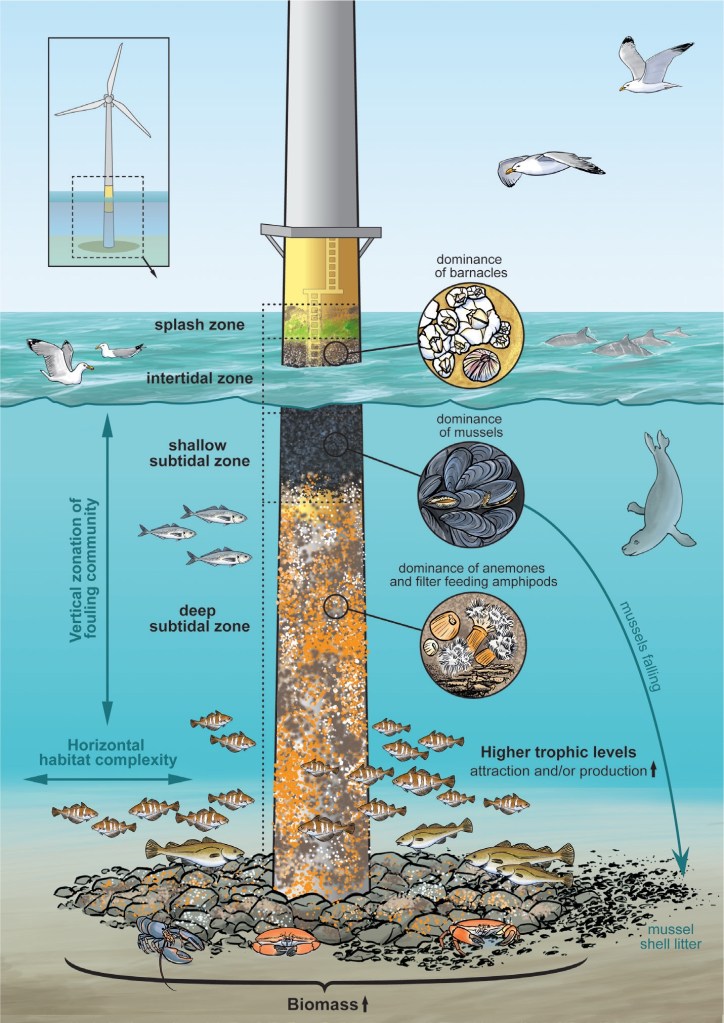
Discussions are ongoing about whether the offshore oil and gas industry has an obligation to remove the entire steel structures or if they can leave the legs of the platforms embedded in the ground after completing oil and gas extraction from the subsurface.
Undergoing research estimates impacts of steel leg structures
Research is underway investigating the impact of steel leg structures on the biodiversity. The hypothesis is that the legs function as a safe haven for a variety of species sheltering them from predators and fisher men. The underlying mechanisms are poorly understood, especially the fact that biodiversity is flourishing around the monopiles, which remains unexplained.
Some researchers hypothesize that the main explanation lies in the implementation of no-fishing zones near platforms and wind farms, aimed at minimizing the risk of offshore vessel impacts with the added benefit of removing predatory pressures on particular species.
Others believe the reason lies in the fact that the structure provides a hard structure on which animals and plants can rely on as shelter. It is also a place where mussels are able to grow filtering micro particles from the ocean water. These mussels are themselves also a basis for food for other animals which are drawn in by the increased biodiversity.
Shipping industry’s contribution toward ecosystem disturbance
Advances in shipping, logistics, and fishing are increasing the number of vessels in areas like the North Sea. As a result, these vessels, equipped with fishing nets and propellers, disturb the environment by means of noise pollution and fishing activities. Among these, trawling is the most destructive type of fishing. Trawling involves dragging a large net across the seafloor, catching any prey that may come into contact with the net as it is dragged along.
Trawling is highly effective in capturing prey, but as the nets are dragged along the seafloor, they remove, move, and disturb rocks, causing entire ecosystems to face disturbances. Furthermore, these disturbances pose a significant threat to the wildlife and fauna inhabiting the seafloor.
Harmful effects of bottom trawling
Crabs, fish, and bottom-dwelling creatures unintentionally get caught in fishing nets and are hauled aboard the vessels. Subsequently, the crew releases most of them during the sorting process. However, the damage is already significant, as the crabs, fish, and their ecosystems are destroyed.
Researchers, from the university of Denmark, and the Danish Hydraulic institution have recently published findings investigating bottom trawler impacts on the benthic fauna across key locations in Denmark and the north sea.
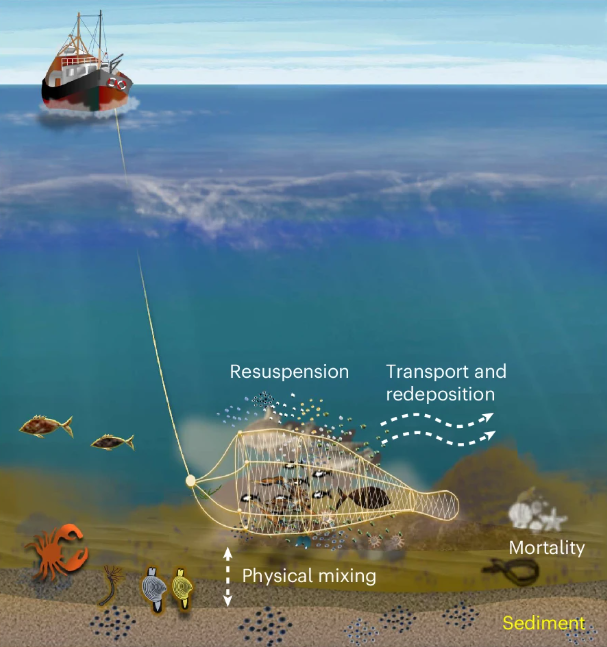
Researchers specifically investigated the gearing grading, including heaviness of the gear, to understand the impacts different types of trawling equipment have on benthic fauna.
They found that crustaceans such as sea stars are among those affected on the seafloor. They get caught in the net, are dragged toward the surface, and then thrown overboard because they cannot be sold to customers onshore leading to increased mortality.
Hypoxia events
This practice of tearing up and discarding the remaining catch is one of the key reasons why the trawling fishing industry is so damaging to ecosystems. Moreover, the disturbance of the seafloor stirs up sediment that has been lying dormant. Blocking out sunlight and depositing on delicate species killing them. Furthermore the sediment might be contaminated with heavy metals polluting and trickling down the food chain across the entire ecosystem.
Some researchers have even hypothesized that disturbed sediments, stirred up into the water column, may increase the risk of hypoxia events by releasing organic material concealed within the sediment, which subsequently is degraded using the entirety of the oxygen within the water column.
The risk for hypoxia within ecosystems are of high concern from research communities as hypoxia is a main source of disturbance for ecosystems as abundant death and degradation of food chains are an immediate result following hypoxia.
Future projections and impacts of hypoxia events
With hypoxia events happening regularly across the Baltic sea, research institutions have looked into the projections of climate change in an attempt to understand and deal with future risks of hypoxia as a result of global warming and climate change.
Scientists and researchers have conducted thorough studies to predict the increased risk of hypoxia events that may result from changing climate conditions. They have looked into, different types of datasets, analyzing effects such as river runoff and sea-surface temperature differences under various future CO2 scenarios. Here they considered state-of-the-art hydrodynamic models of the Baltic sea in particular. These models are crucial for understanding the distribution and extent of water column oxygen leading to the understanding and extent of hypoxia events.
However they find that natural variability obscures long term outlooks to such a degree that conclusions are hard to draw.
Nutrient loading and hypoxia
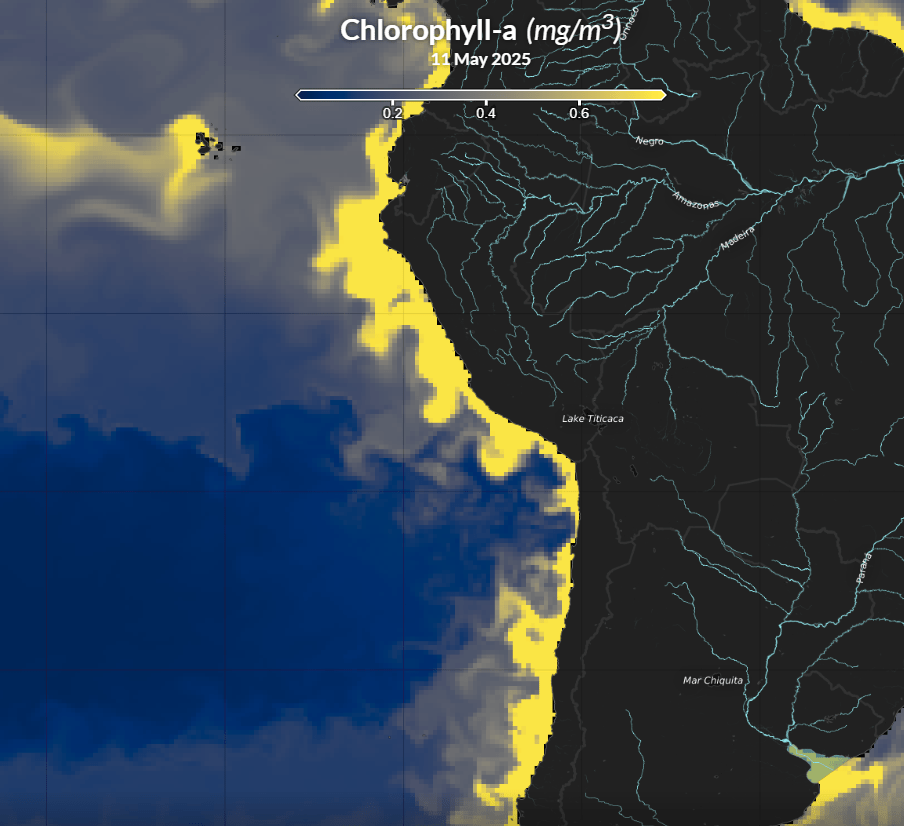
Another important factor contributing to hypoxia events is the nutrient load from river runoffs into the sea. Specifically, as farmers spread nutrients across their lands, excess nutrients wash into lakes and rivers, which then transport them to the sea, thereby increasing the nutrient loading of oceans.
Related read: Impact of Ocean Currents on Marine Ecosystems
As oceans absorb nutrients, they create ideal living conditions for algae, leading to blooms that cover vast areas of the ocean. In some cases, these blooms cover the water’s surface, blocking sunlight and causing the death of bottom-dwelling fauna. Subsequently, as the algae mature and die off, they sink to the bottom and consume the remaining oxygen, ultimately leading to hypoxia events.
Initiatives implemented for combating hypoxia and nutrient loading
New initiatives specifically target the farming industry, aiming to reduce the use of pesticides, which are one of the leading causes of algae blooms in the Baltic and North Sea areas.
These groundbreaking initiatives represent a first-of-its-kind effort to combat the adverse effects of increased nutrient loading in the environment. Consequently, Denmark stands as the first nation to implement such radical incentives in an effort to address this type of pollution.
In addition, other initiatives aim to preserve biodiversity and ensure that biodiversity issues do not worsen. For example, the European Nature 2000 policy is implemented in key areas deemed worth protecting for future generations.
Development of Natura 2000 policy
The main idea behind the Natura 2000 policy is conservation through the generations. The effort for conservation is implemented across the European continent. Authorities implement the policy in both offshore and onshore areas across various locations spanning the European continent. These areas are strictly protected, ensuring that any proposed changes do not alter or impact the Natura 2000 areas in any way.
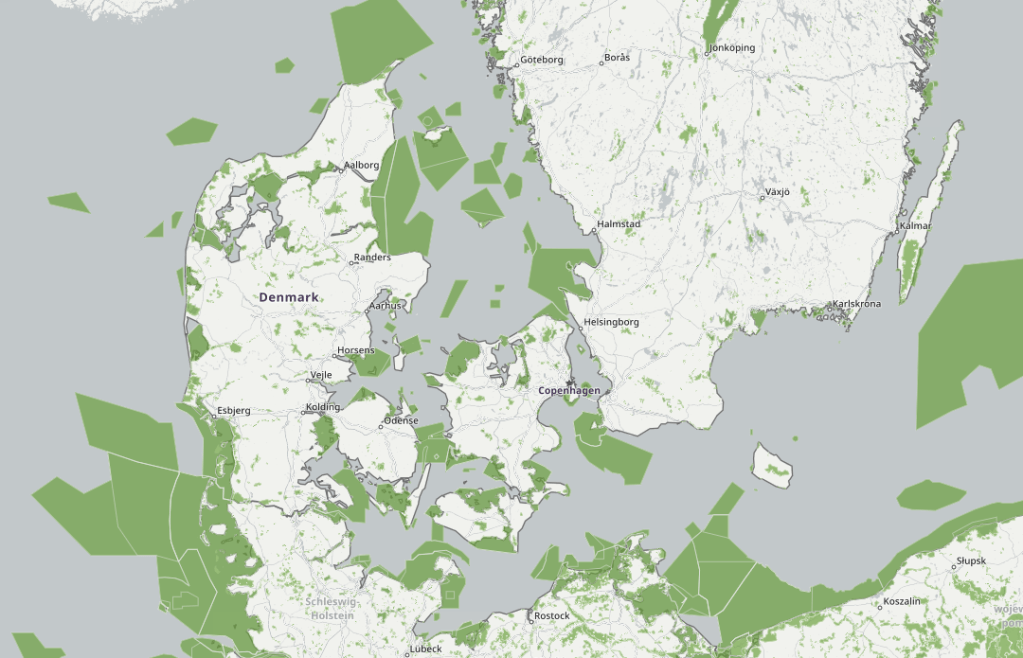
These areas consist of biodiverse locations with significant environmental value. As a result, authorities keep developmental projects in check, thereby preventing them from impacting and destroying pristine natural areas.
The authorities implemented the policies in 2000, therefore coining the term ‘Natura 2000’. The initiative shed light on the biodiversity crisis within the animal kingdom, where an increasing number of species are becoming extinct due to crisis within reduced feeding grounds and displacements from their natural habitats.
Conclusions
The environmental impacts of the offshore industry is currently not fully understood. Multiple studies and facets of the industry have been uncovered however there is still a lack of understanding for key aspects and long-term effects.
Initiatives have been implemented in an effort to combat biodiversity crisis happening across the globe and particularly within the animal kingdom.
References
Noise mitigation strategies for offshore wind solutions – https://www.natur-und-erneuerbare.de/fileadmin/Daten/Download_Dokumente/01_Skripte/Noise-Mitigation-Offshore-Wind-Turbines-2020.pdf.
Discussion of North Sea infrastructure history:
Maria Clara Iruzun Martins, et al. (2023). Offshore energy structures in the North Sea: Past, present and future. Elsevier ltd, Marine Policy. https://doi.org/10.1016/j.marpol.2023.105629
Sketch concerning monopile biodiversity adopted from:
Degraer, S., D.A. Carey, J.W.P. Coolen, Z.L. Hutchison, F. Kerckhof, B. Rumes, and J. Vanaverbeke. 2020. Offshore wind farm artificial reefs affect ecosystem structure and functioning: A synthesis. Oceanography 33(4):48–57, https://doi.org/10.5670/oceanog.2020.405.
Research considering effects of bottom trawling:
Clara et al. (2024).The relative effects of bottom trawling, organic enrichment, and natural environmental factors on coastal seabed communities. Elsevier ltd. Marine Pollution. https://doi.org/10.1016/j.marpolbul.2024.117169
Figure concerning bottom trawl sketch adapted from: Zhang, W., Porz, L., Yilmaz, R. et al. Long-term carbon storage in shelf sea sediments reduced by intensive bottom trawling. Nat. Geosci. 17, 1268–1276 (2024). https://doi.org/10.1038/s41561-024-01581-4
Forward projections of hypoxia events: Markus Meier, H.E., Dieterich, C. & Gröger, M. Natural variability is a large source of uncertainty in future projections of hypoxia in the Baltic Sea. Commune Earth Environ 2, 50 (2021). https://doi.org/10.1038/s43247-021-00115-9
 The Skjærup blueprint
Leave a comment