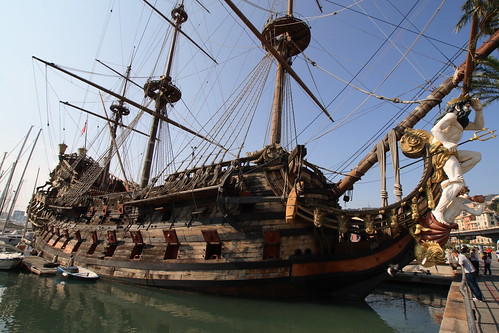
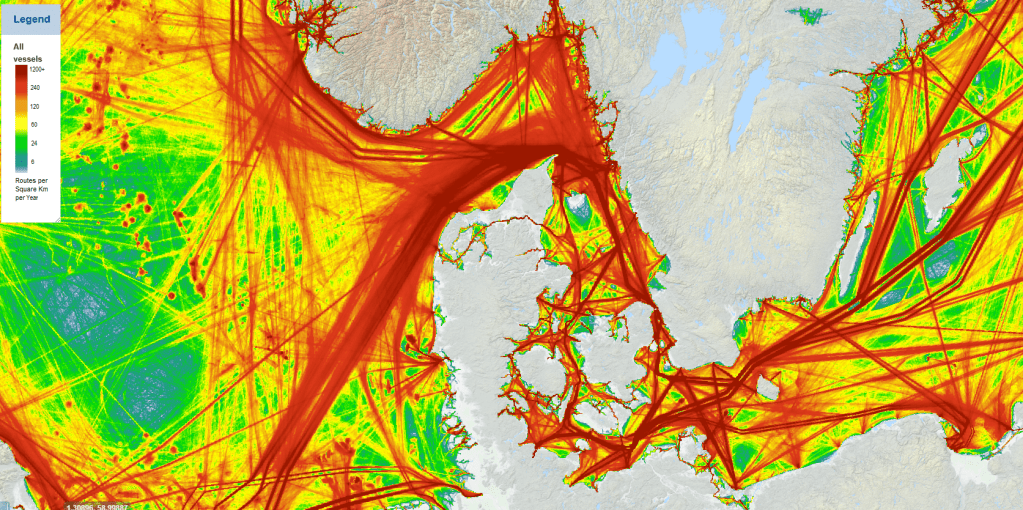
The importance of the wave climate is hard to understate as the majority of our population lives in or near shorelines and coastal cities. Coastal cities are prime spots for ensuring that the global trade of goods and services are available as the seaway is the most energy efficient manner to transport goods long distances. One of the downside with transport by sea is the risk of piracy as controlling the transport ways is almost impossible due to the vastness of the sea.
Ocean and trade in human development
The fascination and dependence of the ocean is one which have sparked the imagination of humans in all of history. The general tendency of establishing settlements near or by the ocean is one which humans have practiced for all of our existence.
Initially the oceans served as a source of fish and sea creatures for consumption which made survival easier for the populations living near the ocean. This in turn lead to developments of ships able to carry increasingly larger cargo available for trade among the cities and countries.
Merchant ships and global trade
With time an innovation culture of shipping and vessel crafting has developed over the centuries. This innovative nature enabled construction of increasingly larger and more durable vessels capable of carrying ever larger amount of goods while traversing larger distances.
Gradually, inventions of sails were introduced allowing for longer journeys to be conducted and made across the vastness of the oceans. This lead to development of refined sailing techniques causing the emergence of a plethora of activities such as sports sailing, fishing, cruise ships and cargo ships.
This sparked the beginning of the modern world where resources from distant places become available to the broader public across the globe. Development of designated trade routes such as the silk and spices trade were made available to people across the globe.
Development of navigational methods and increasingly detailed maps allowed proper management and optimized solutions for the trade to occur.

This lead to construction of trade companies whose purpose it was to ship and transport goods across the globe. Everything was traded along trade routes including garments, gold, silver, weaponry, agriculture and spices. However, this increased trade and traffic enticed people to indulge in illegal activities with the emergence of pirates as a result.
Related read: Impact of Ocean Currents on Marine Ecosystems
Piracy and bounty
A pirate is historically portrayed in movies and cinemas as a bearded one-legged man who without hesitating would shoot, plunder and murder anyone standing in the way for their bounty. Although this makes an excellent and entertaining story, the truth is that the majority of piracy ships never engaged in combat unless it was absolutely necessary. Reasons for this is that the risks was exorbitant for the combatants involved who could potentially face death as a result.
Instead the most successful pirates, were more cunning and knew that their greatest assets were their reputation and brand as a fearful pirate. The reason being was that by raising their flags, ships became aware of their presence and had to decide whether to fight or flight. As pirate ships usually were built with speed and agility in mind, it happens that often the best strategies for trade ships were to hand over their bounty to the pirate ships without engaging in combat as the risk of death and destruction were to high.
Owner-crew principal-agent dilemma
Another reason for handing over the bounty instead of engaging in risky, possibly even deathly combat, was that merchant ships weren’t owned by the crew managing and sailing them, rather, they were owned by offshore people not present or conducting their operations. This meant that the people working and risking their lives for the endeavor, had no interest in preserving the ship and goods as they didn’t have any shares in them.
This is a key dilemma for ship-owners, as they were enticed to keep the profitable business of transporting goods and services while still remaining safe at home racking in profits from the endeavor with minimal personal risk. However, with this decentralized setup they lose immediate control of the ship routes and cargo unable to affect and control actions which determines fate of the ship. Therefore, ship owners had to rely on the trust that crew members showed them and that they had sufficient incentives to complete the journey, without abandoning ship and loot in the case of danger.
This is called the principal agent dilemma and is seen in many parts of society where owners the benefiters of a company is detached from the operation and daily activities behind the company. As a result of the increased uncertainties, solutions had to be made in order to minimize the inherent risks associated with the trade business.
Insurance policies and first instances of the stock market
The solution which they came up with, was insurance companies. Insurance companies profit on minimizing the uncertainty and risk associated with the transport of goods and services across the globe. Insurance companies provide a means of comfort for the owners associated with the trade.
This also lead to the invention of the predisposition to the stock market, as ‘investors’ could purchase certificates representing a set quantity of a specified good or service enabling them to buy and share some of the revenue while simultaneously limiting the risk associated with the endeavors as a minimal quantity could be put up for sale..
Naval warships and their impact on piracy
As a means to counteract the possibility of pirates, naval warships were introduced. These are large vessels equipped with weapons ensuring that any hostile activity can be reacted upon. Some of the weapons which were carried are canons, sables and guns. These proved effective in combat and even more effective as a deterrent since pirates facing possibilities of engagement often fled the scene before fighting even begun, fearing the consequences of engaging in naval combat against the warships.
While the deterrent effects were somewhat successful, pirates still engaged merchant ships and in certain instances managed to escape with bounty from underneath the cargo. Although films often depict pirates drinking whiskey, rum, and celebrating wildly after a raid, the reality was far more sophisticated.
Given the high risks associated with raiding, pirates took great care in managing their spoils when they succeeded. Although this lead to a conundrum; how do we ensure an equal and fair distribution of goods among the parties when raid attempts are successful? The solution; writing down laws regulating the distribution of goods and services.
Unwritten laws of piracy
The intricate way of dealing with risk, bounty and managing a team of rowdy pirates lead to the development of a set of unwritten laws:
- Equal share for equal risk: At its core, the unwritten piracy laws state that there should be an equal distribution of bounty for equal risk among the participants.
- Role-specific share: Captains and quartermasters among others typically received higher compensations for their added responsibilities and skills.
- Compensation for injuries: Compensations were also made for injuries sustained in battle ensuring that the injured pirates wellbeing following an incident was compensated.
They were unwritten however they provided the framework for distributing goods and loot obtained from raiding ships in the rough seas. Breaking the rules were strictly forbidden and could be met with harsh consequences for the individuals involved however as they were criminals, ‘rules’ were often broken or disparities broke out leading to the famous punishments such as keel-hauling and walking the plank.
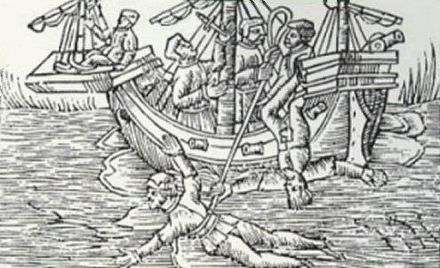
The unwritten laws show that pirates were not the ravaging drunks often portrayed in movies and cinemas but had some finesse to them as they used their wits towards managing risks.
Modern day piracy
In present days, piracy still exists in key trading straits such as outside the coast of Somalia especially near the gulf of Aden. Pirates raid and harass large cargo ships across the seas, with smaller boats maneuvering effectively and fast around the bigger immovable vessels.
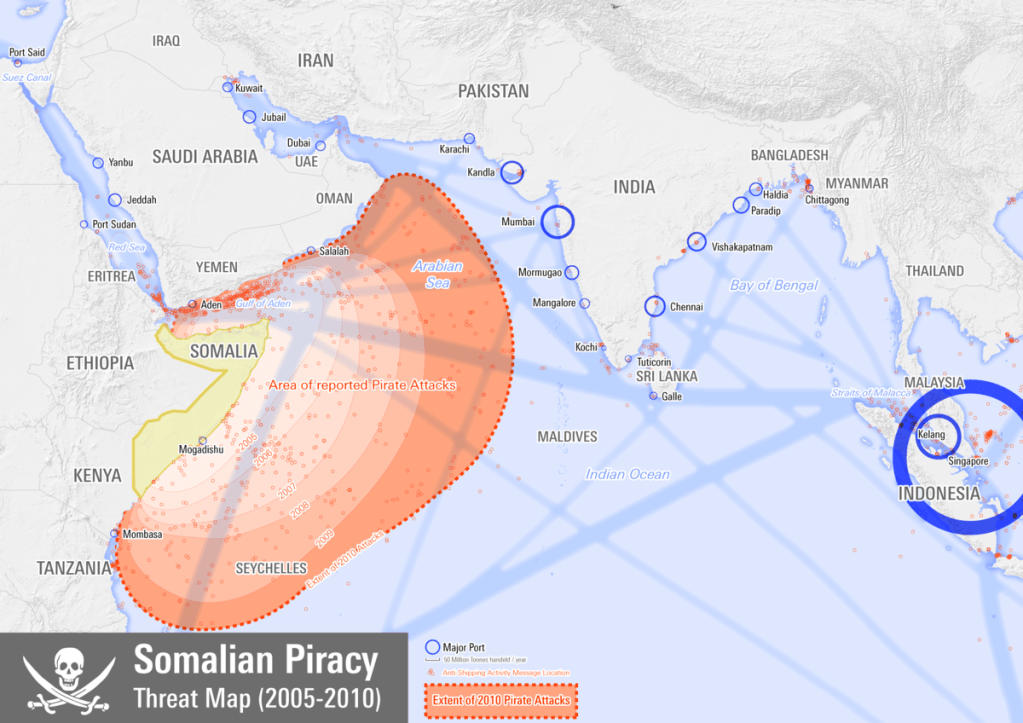
These illicit activities causes instability in the global trade patterns resulting in countries sending large military vessels down as an attempt to stabilize and deter other pirates from easily boarding, raiding and causing havoc. However in certain instances the military installments have been inadequately equipped for posing a direct threat towards the strait.
Other means of deterrents used in merchant ships are the inclusion of water hoses and nets\barbed wire on the large vessels. The hoses are used to spray incoming vessels from above knocking off crew members and halting movements in their track.
The barbed wire ensures that potential pirates trying to scale the hull are faced with difficulties crossing the railing risking getting stuck and pinched in an awkward spot being exposed to the possibility of opening fire towards them.
Safety measures for combating piracy
Safety of the crew members on board the ship are also of importance ensuring that they are safe and sound through the journey carrying the cargo.
One of the measures for providing safety to the crew onboard are so-called safe rooms, where doors are locked and people are kept safe inside without the possibility of ramming through the sealed metal doors.
Furthermore, the safe rooms are equipped with supplies for staying fit and healthy for extended periods of time including radio communication devices allowing crew members to call for help and provide coordinates to nearby vessels responding.
Lastly, large cargo ships are also equipped with regular tactical firearms such as the AK47 enabling them to return fire in the chance that they are engaged upon by pirates.
With all these safety measures one would think that piracy in the 2100’st century was a thing of the past, however piracy still poses significant threats to global supply chains, as disruptions in time schedules and deliverables can be initiated by a few disruptive individuals.
Why does piracy exist in modern society
One hypothesis for the persistence of piracy suggests that it stems from the actions of individuals attempting to escape poverty and social inequality.
These individuals are lured by the prospect of quick gains and the hope of securing a better future for themselves and their families. However, their actions are often impulsive and fraught with significant risks, including the potential for harm or devastation to both themselves and others involved.
The socio-economic stability of countries bordering key maritime straits is considered a critical factor contributing to piracy. Addressing and stabilizing the economies of regions surrounding these straits, such as Somalia, is believed to be a potential solution to mitigating piracy issues.
Socio-economic development of piracy prone countries
Promoting socio-economic development in piracy-prone countries presents significant challenges, as differing opinions and lifestyles often hinder the overall well-being of the population. Strategies to support safe development and sustainability in these regions include developmental funding and the implementation of extra-governmental monetary policies.
These funds must be allocated efficiently and securely, addressing societal differences with care to build a strong and equitable foundation. Ensuring fair resource distribution among all contributors is essential. However, a significant challenge in such initiatives is the risk of corruption within government structures. Corruption undermines societal frameworks, creates inequalities, and fuels unrest among populations deceived by the actions and policies of their leaders.
Piracy is a complex, multi-faceted issue with no straightforward or quick-fix solution. Addressing the long-term development needs of society in a way that benefits everyone is a challenging task. Globally, piracy poses a significant threat, as trade is vital for transporting goods from resource-rich areas to those facing scarcity. Large corporations heavily rely on vessels to achieve economies of scale and ensure efficient operations, making the impact of piracy on global trade even more critical.
References
Verschuur, J., Koks, E.E. & Hall, J.W. “Ports’ criticality in international trade and global supply-chains.” Nat Commun 13, 4351 (2022). https://doi.org/10.1038/s41467-022-32070-0



 The Skjærup blueprint
Leave a comment