History of the Atterberg limits
The inventor of the Atterberg limits were the Swedish inventor, chemist and agronomist Albert Atterberg, who introduced the concept of characterizing soils and their behaviors based on the water content in the soils establishing the two distinct limits, liquid limit and plastic limit for the understanding of cohesion soils behavior.
The invention of the Atterberg limits dates back to the year 1911 where he was the first to discover and introduce the two toes of limits used for the description of silt and clay filled soils.
The Atterberg limits play a vital role in understanding how soil behaves under different moisture conditions, including fully wetted, partly wetted, and dried states. Engineers and geologists frequently use these limits to distinguish between cohesive and cohesionless soils.
Quantifying this distinction can be challenging, but the Atterberg limits offer a solid basis for differentiating a soil’s behavior in the presence of water.
Understanding water-soil interactions is crucial when constructing various types of structures on soil. It’s essential to know the water content in the soil, as it directly affects the settlement of the structure, along with the bearing capacity and skin friction properties of load-bearing members.
These factors highlight the significant impact that soil water content has on the built environment. This importance is further emphasized by the numerous foundational problems that can arise from a poor understanding of how soil behaves across the spectrum of water content typically encountered.
Liquid limit of soils
The Atterberg limits process includes the liquid limit of soils, along with the plastic and shrinkage limits, which will be detailed in the following paragraphs.
Understanding liquid limits is crucial, as it equips geotechnical engineers with insights into how soils behave under varying moisture conditions. This knowledge enables them to consider a wide range of applicable scenarios when evaluating the foundation potential for large construction projects.
Brief history of the Casagrande test
The Casagrande test methodology and equipment evolved from the previously developed Atterberg limits, which assess the liquid and plastic limits of soils.
To grasp how and why the Casagrande test emerged, it’s essential to explore the history of the Atterberg limits. For an in-depth discussion and historical context, along with different perspectives on the Atterberg limits, refer to the related reads post.
Related reads: Understanding clay characteristics across Denmark, The Role of Clay in Sedimentary Rock Formation
Now for the development of the Casagrande test methodology let’s build our foundational knowledge up starting with the Atterberg limits, which is the basis of understanding the Casagrande test methodology.
Casagrande test refinement
Arthur Casagrande based his methodology for understanding and determining the liquid limits of soils on early observations. He developed a refined process utilizing standard equipment.
The Casagrande test primarily identifies the liquid limit of soils. In this test, a specially dug tunnel in a prepared specimen receives a continuous flow of air, causing the valley walls to collapse. This testing method allows geotechnical engineers to assess slope stability across a range of soil water contents, leading to the precise measurement of soil behavior.
By conducting slope stability analysis this way, users can distinguish soils based on their moisture levels, from dry to fully saturated. As slope stability fluctuates with water content, the test establishes the liquid limit, which helps users understand the transition of clay and silts into a nearly liquid state and when this behavior first manifests.
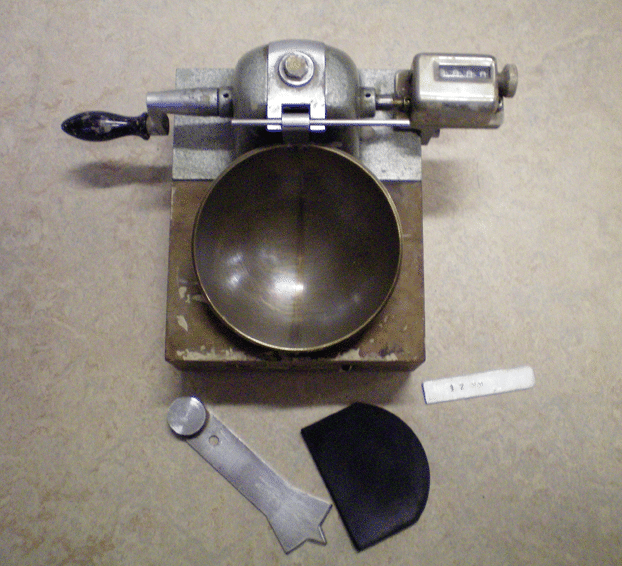
The apparatus used for the Casagrande test is pictured at the top of this article. It ensures that the test is performed in a standardized manner for consistent results. Over the years, experts have meticulously designed the shape, size, and functionality of the test to guarantee accuracy within the established methodological boundaries.
Plastic limit of soils
To determine the plastic limit of soils, experts utilize the method of rolling the soil into an elongated cylinder until it breaks at a specific diameter. While this procedure may appear arbitrary to the untrained observer, it effectively delivers a consistently accurate representation of the plastic behavior of both clay and silts.
Engineers and geotechnical professionals rely on the plastic limit to assess soil behaviors in practical applications. This understanding is vital when exploring soil characteristics that typical tests, such as oedometer, triaxial, or standard penetration tests, may not easily reveal.
Related reads: Consolidation test: From oedometers to modern practices, Understanding Triaxial Test: Soil Strength in All Directions, Evolution of the standard penetration test (SPT).
Additionally, the plastic limit forms a part of the plasticity index, which helps us comprehend the behavior of everyday soils.
Shrinkage limit of soils
The shrinkage limit of soils is determined by measuring the dried water content of a wetted specimen after 24 hours in a heated oven. Although this limit is not as widely used as the plastic and liquid limits, it provides valuable insights into soils, especially in dry environments that experience periodic wetting.
In general, researchers still find the shrinkage limit to be the least understood and tested among the three limits, making it a subject of extensive study today. This limit indicates the point at which the soil’s water content can no longer reduce its shape and volume, meaning that further drying will not result in any changes to the volume occupied by pore water.
Modern equipment, such as the “SHRINKiT” system developed by British geotechnical laboratories, facilitates automatic determination of the shrinkage limit. This system aims to standardize the testing process and equip users with the necessary tools for soil evaluation. For more information, see references and related blogs.
The plasticity index
The plasticity index is a range defined by taking the difference between the liquid and the plastic limit and thus is a measure of the soils behavior under various water contents. The range of behavior is important as the soils are usually experiencing a wide range of moisture content throughout the lifetime of foundations.
The importance of the plasticity index is crucial when trying to understand the ranges of plastic behavior of soils. This behavior plays an important role when trying to understand the differences within the given soil specimen including the behavior of the specimens during rainy weather in winter and autumn times.
The measure allows for the interpretation of the soil content of water with the corresponding brittle or plastic behavior where soils with a large plasticity index have a broad range of behavior which is dependent on the clay and silty behaviors while the soils with a small index corresponds to mostly sandy soils displaying a direct transition from plastic to brittle behavior.
The soils with a larger plasticity index challenges the life of the geotechnical engineer as the soil behavior ranges widely increasing complexities when trying to understand the behavior of the soil specimen. This complicates matters in relation to the design process of buildings and infrastructure such as roads, bridges, railways and High-rise buildings to mention a few.
Perspectives
The utilization of the Casagrande test methodology enables users with the ability to accurately determine the liquid limits of soils. It has been a stable tool in the general geotechnical engineer toolbox for centuries and is still today undergoing refinement procedures, automations and investigations on improving accuracy and further standardization of the method used for decades.
Determination of liquid limits
Determining the liquid limit is crucial for various construction projects, including embankments and pile driving. It serves as a foundation for analyzing clay materials, making it essential to consider.
Researchers are developing alternative methods to determine the liquid limits of clay to enhance the reliability of existing methodologies. The fall cone test has emerged as the most prominent alternative. In this test, a fixed mass, shape, and angle for the fall cone measures penetration depth over a specific period of time.
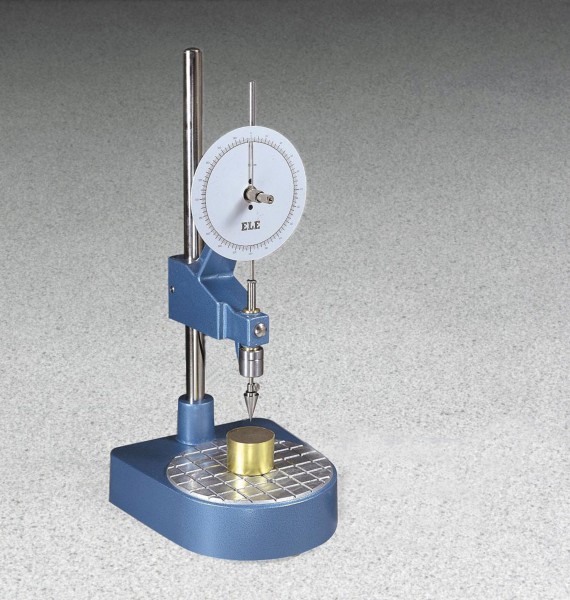
Usually, achieving an exact penetration depth in a given soil is not possible. Instead, scientists conduct multiple measurements to interpret the liquid limit of that soil.
Since the procedure is easily repeatable, some scientists prefer using this method to determine liquid limits over the Casagrande method. However, discrepancies arise in defining the shape and size of the fall cone, the mass used, and the penetration depth of the specimen.
The variability in shape, angles, masses, and penetration test determinations makes the fall cone test a nation-specific procedure, lacking a general consensus. This provides a solid reason for using the classical Casagrande test procedure, which still serves as a reliable method for determining the liquid limits of soils.
Conclusion
In summary, the Atterberg limits, encompassing the liquid limit, plastic limit, and shrinkage limit, serve as fundamental tools for understanding and characterizing the behavior of soils under varying moisture conditions. Developed by Albert Atterberg in 1911, these limits provide essential insights for geotechnical engineers, enabling them to make informed decisions regarding the suitability of soils for construction and other infrastructural applications.
The liquid limit and plastic limit are particularly useful in assessing the plasticity and workability of clay and silty soils, while the shrinkage limit, though less frequently utilized, offers crucial information in specific arid contexts. Moreover, methodologies like the Casagrande test and the fall cone test highlight the ongoing efforts to refine and standardize testing techniques for better accuracy.
As we continue to explore the complexity of soil-water interactions and their implications for engineering, the knowledge derived from the Atterberg limits will remain vital in mitigating risks related to foundation stability and performance in our built environment. Understanding these principles is key to ensuring safe and sustainable construction practices that can accommodate the challenges posed by varying soil conditions.
References
British geological survey internal report. “SHRINKiT: automatic measurement of shrinkage for clay soils” 2010.




Leave a Reply